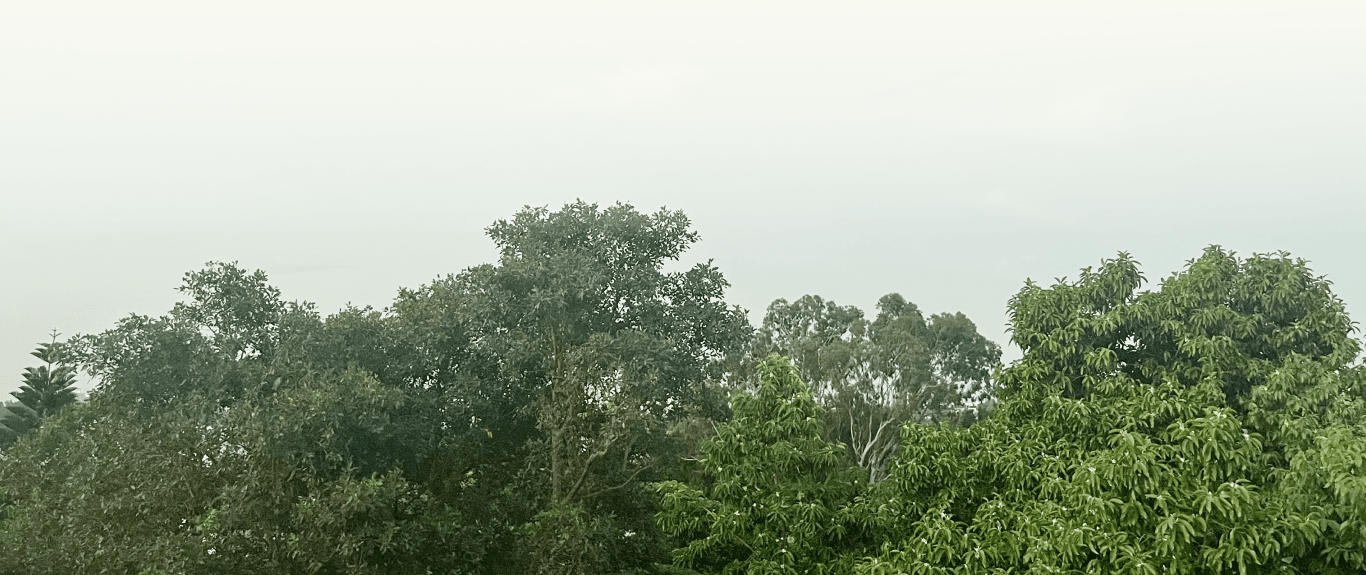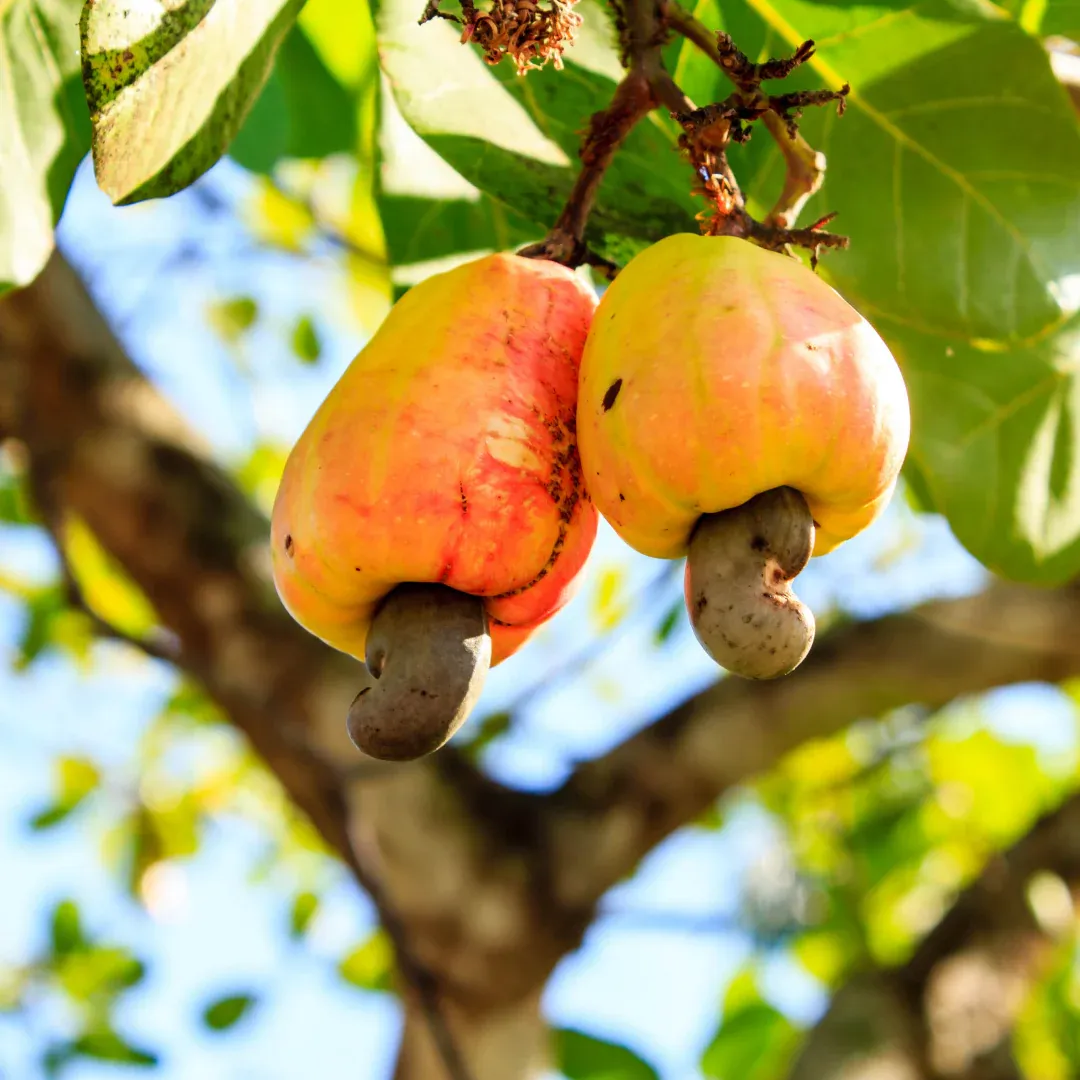
A Coastal Crop Where Fruit and Seed Tell Two Different Stories
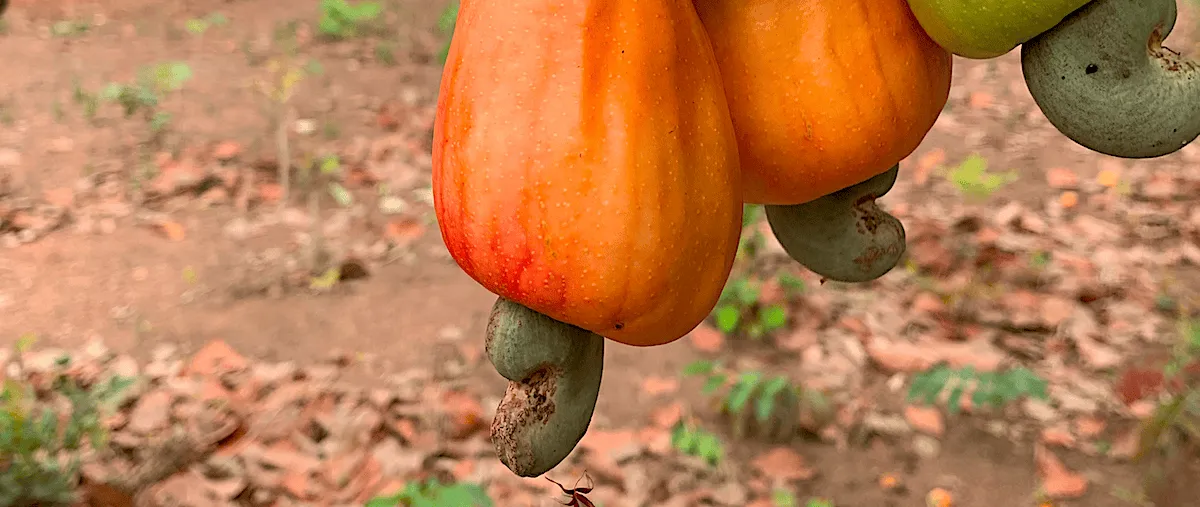
The cashew tree is one of the most unusual fruit trees grown in tropical regions. At first glance, it looks like a typical orchard tree—broad canopy, spreading branches, and seasonal fruiting. But a closer look reveals something different.
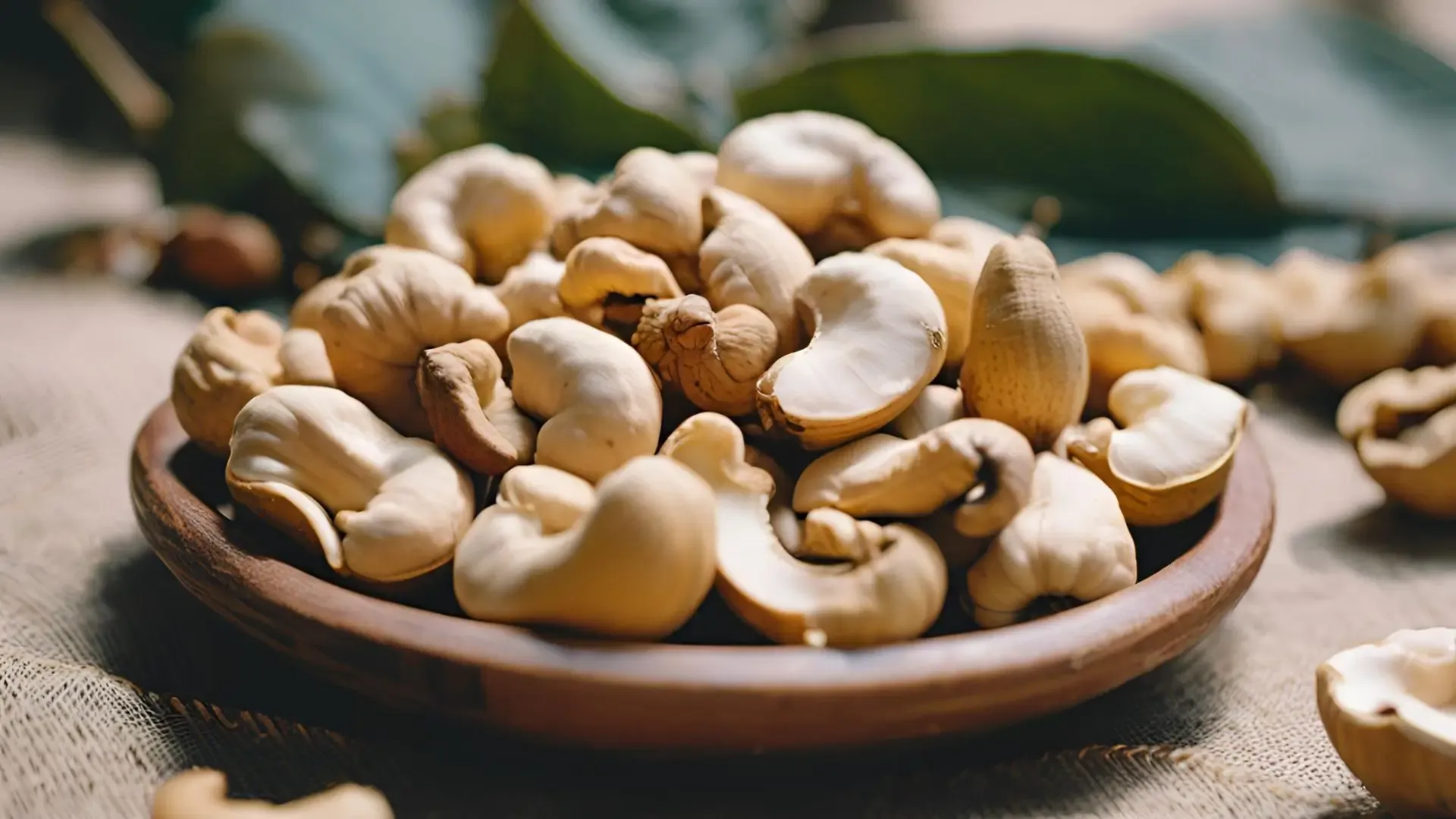
What we commonly call the “cashew nut” is not the fruit. It is the seed.
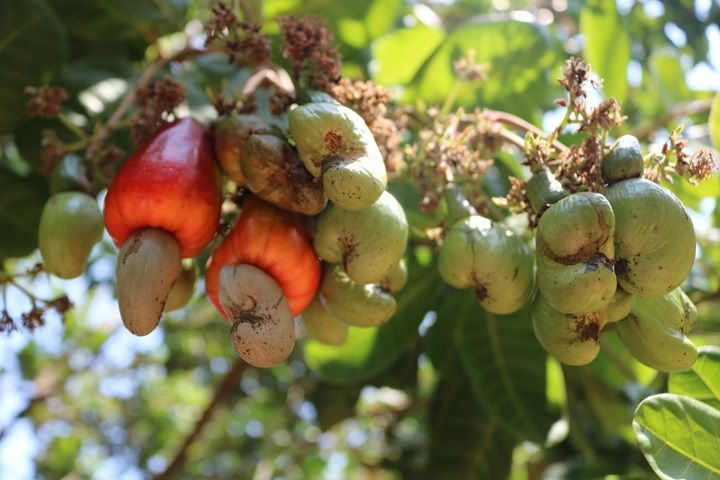
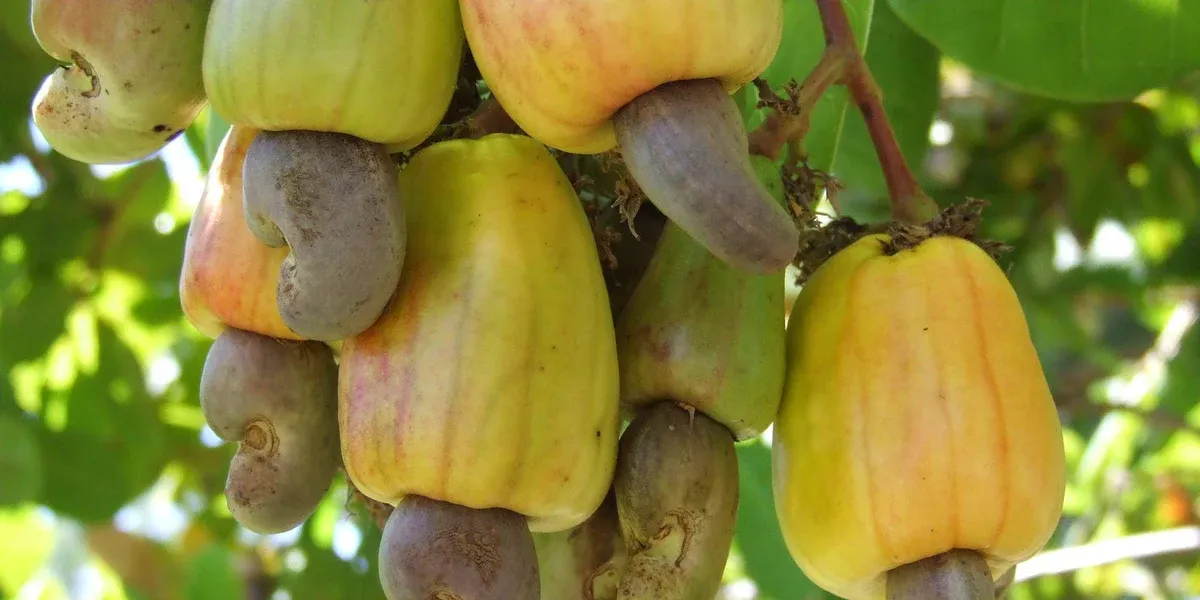
The fleshy, colorful structure attached to it—the cashew apple—is the actual fruit.
This dual structure makes the cashew tree one of the most distinctive crops in tropical agriculture.
Botanically known as Anacardium occidentale, the cashew tree is native to Brazil but is now widely cultivated across India, Southeast Asia, and Africa. It thrives in warm climates, especially in coastal regions where sandy soils and high temperatures create conditions that suit its growth.
A tree adapted to heat and coastal soils
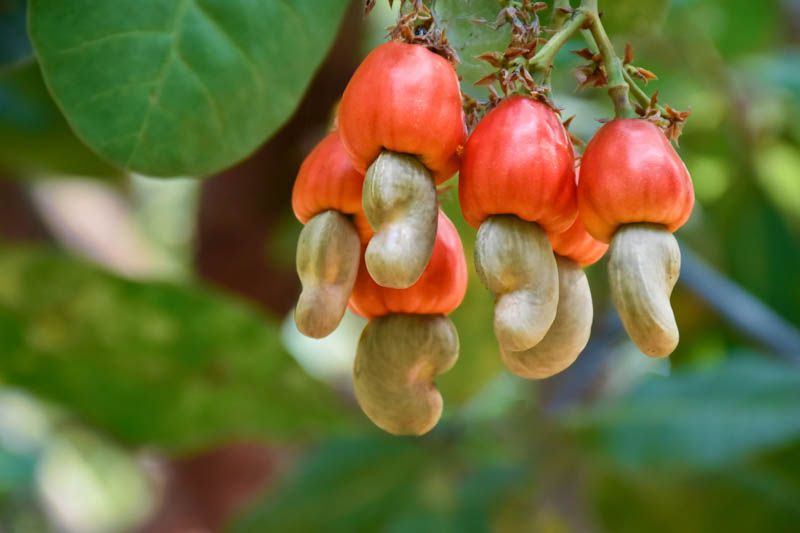
Cashew trees grow best in tropical climates with well-defined dry seasons.
They are particularly well suited to coastal environments where soils are sandy and nutrient levels are relatively low. Unlike many fruit trees that require fertile soil and irrigation, cashew trees can establish themselves in marginal conditions.
Their deep root systems allow them to access moisture below the surface, while their thick leaves help reduce water loss. This combination makes cashew trees relatively drought-tolerant once established.
Because of this resilience, cashew plantations are often found in coastal belts and dryland farming regions where other commercial crops may struggle.
Structure and growth of the cashew tree
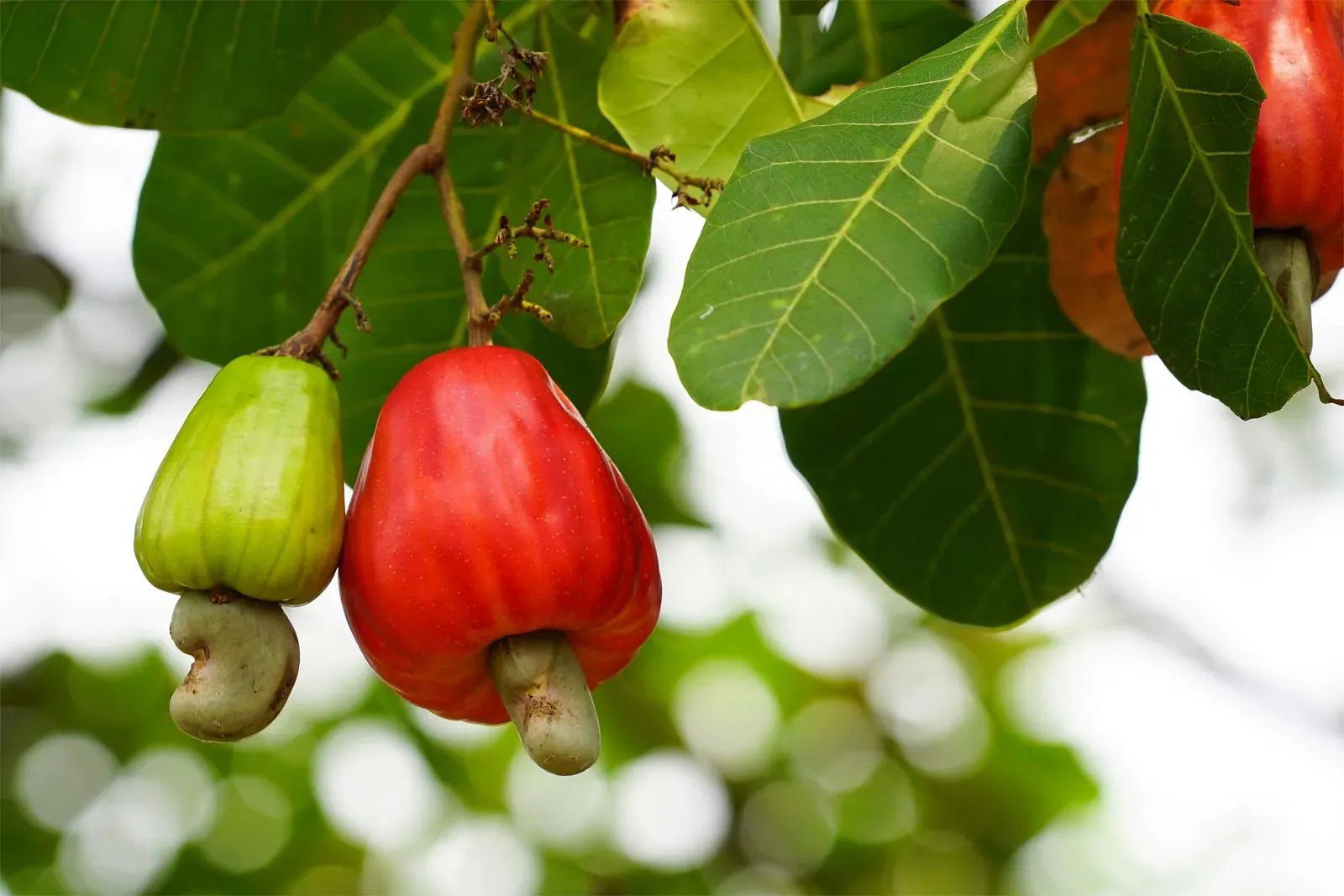
The cashew tree typically grows between 6 and 12 metres tall, although it can spread wider than it grows tall. Its canopy is broad and irregular, with branches extending outward to capture sunlight.
This spreading structure allows the tree to shade the ground beneath it, helping reduce soil moisture loss. The leaves are thick and leathery, designed to withstand heat and sunlight.
During the flowering season, small pale flowers appear in clusters. These eventually develop into the distinctive cashew fruit structure.
The botanical structure and classification of cashew are described in plant databases such as Anacardium occidentale in Plants of the World Online.
The cashew apple and the cashew nut
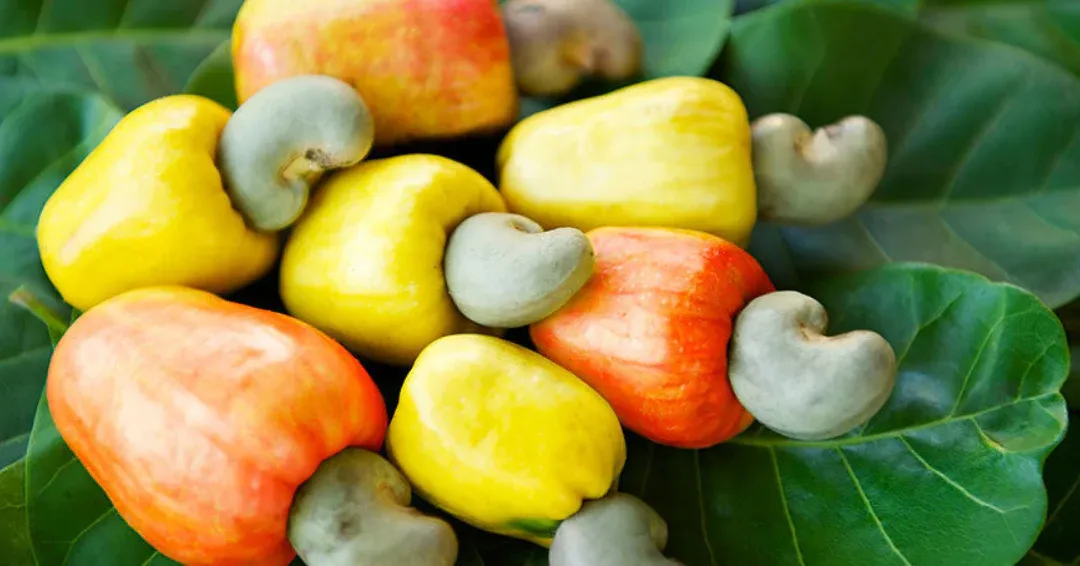
The cashew tree produces a fruit unlike most others.
The cashew apple is a swollen, juicy structure that develops from the flower stalk. It is edible, slightly sweet, and highly perishable. Attached to the bottom of the apple is the kidney-shaped seed—the cashew nut.
This seed is encased in a hard shell that contains a toxic resin. Before cashew nuts are safe to eat, they must be carefully processed to remove this resin.
The relationship between the cashew apple and the nut often surprises people. While the apple is the true fruit, the nut is the part most widely traded and consumed globally.
A broader botanical explanation of this structure can be found in the overview of cashew fruit and plant biology.
Cashew in global agriculture
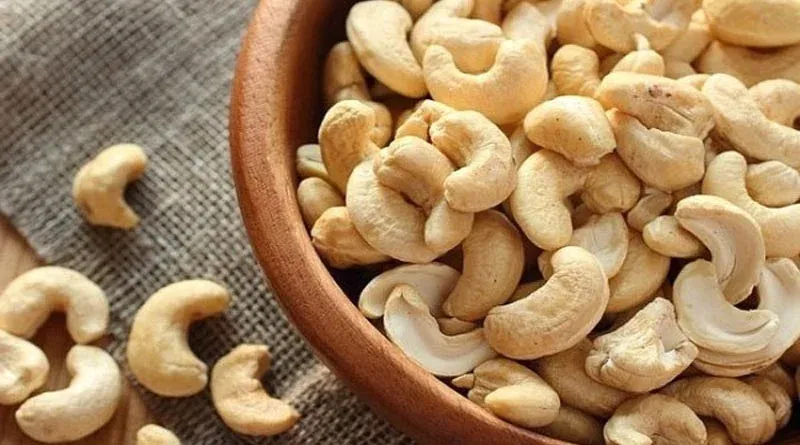
Cashew is an important commercial crop in many tropical countries.
India is one of the largest producers and processors of cashew nuts, along with countries in Africa and Southeast Asia. The crop plays a significant role in export markets, providing income for farmers and workers involved in processing.
Cashew cultivation is often carried out on small to medium farms, although larger plantations also exist. Because the crop can grow in relatively poor soils, it is frequently used in regions where agricultural options are limited.
Global production trends and trade flows for cashew and other crops are monitored through international agricultural systems such as those maintained by the Food and Agriculture Organization.
Ecological role in dryland and coastal systems
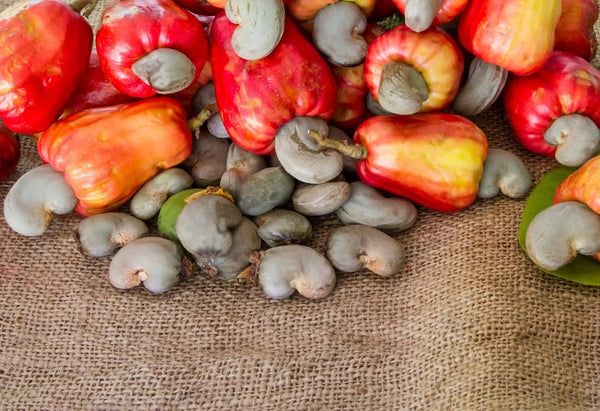
Cashew trees contribute to the stability of the landscapes in which they grow. Their root systems help bind soil, reducing erosion in coastal and sloped areas. The canopy provides shade that lowers ground temperature and helps retain soil moisture.
In mixed farming systems, cashew trees can support biodiversity by providing habitat for birds and insects. Their flowers attract pollinators, while fallen leaves contribute organic matter to the soil.
Cashew trees are also sometimes used in land restoration efforts, particularly in degraded coastal areas where their resilience can help establish vegetation cover.
Challenges in cashew cultivation
Despite their adaptability, cashew trees face several challenges.
Pests and diseases can affect yields, particularly in humid conditions. In addition, processing cashew nuts requires careful handling because of the toxic substances in the shell, which can pose health risks if not managed properly.
Climate variability is another growing concern. Changes in rainfall patterns and temperature can influence flowering and fruit development, affecting productivity.
Understanding how agricultural systems respond to environmental stress is increasingly important, especially in tropical regions. These broader climate-related challenges are explored in frameworks such as the IPCC Sixth Assessment Report on climate impacts and adaptation.
A crop that connects agriculture and markets
The cashew tree sits at the intersection of ecology, agriculture, and global trade. It grows in landscapes that are often considered marginal, yet it produces a product that is traded worldwide. This contrast highlights how certain crops can transform local environments into economically important systems.
At the same time, the cashew tree reminds us that agricultural value is often shaped by processing and supply chains as much as by the plant itself.
The fruit may be local and perishable, but the seed becomes a global commodity.
Where the cashew tree fits today
The cashew tree continues to play an important role in tropical agriculture. It provides income in dryland regions, supports soil stability in coastal areas, and contributes to diversified farming systems. Its adaptability makes it a practical choice in landscapes where other crops may fail.
Yet its importance is not only economic. The tree reflects how plants adapt to difficult environments and how agriculture evolves around those adaptations.
In many ways, the cashew tree is defined by contrast—between fruit and seed, local use and global trade, resilience and vulnerability.
FAQs
1. What is the cashew tree?
The cashew tree is a tropical fruit tree known for producing cashew nuts and cashew apples. Its scientific name is Anacardium occidentale.
2. Where does the cashew tree grow best?
Cashew trees grow best in warm tropical climates with well-drained sandy soils. They are commonly found in coastal and dryland regions.
3. Is the cashew nut a fruit or a seed?
The cashew nut is actually a seed that grows outside the fruit. The fleshy part, called the cashew apple, is the true fruit.
4. What is the cashew apple?
The cashew apple is the swollen, juicy structure attached to the nut. It is edible but highly perishable compared to the nut.
5. How tall does a cashew tree grow?
A cashew tree typically grows between 6 and 12 metres tall. It develops a wide, spreading canopy.
6. Are cashew trees drought-resistant?
Yes, cashew trees are relatively drought-tolerant once established. They can grow in low-rainfall and nutrient-poor soils.
7. Why are raw cashew nuts not safe to eat?
Raw cashew shells contain a toxic resin that must be removed through processing. Proper roasting or steaming makes them safe to consume.
8. Are cashew trees used in agroforestry systems?
Yes, cashew trees are often integrated into agroforestry systems. They help stabilize soil and diversify farm income.
9. What are the main uses of the cashew tree?
Cashew trees provide nuts, fruit, and by-products like cashew shell oil. They also support livelihoods in tropical farming regions.
10. How long does a cashew tree take to produce fruit?
Cashew trees usually start producing fruit within 2–3 years after planting. Productivity increases as the tree matures.