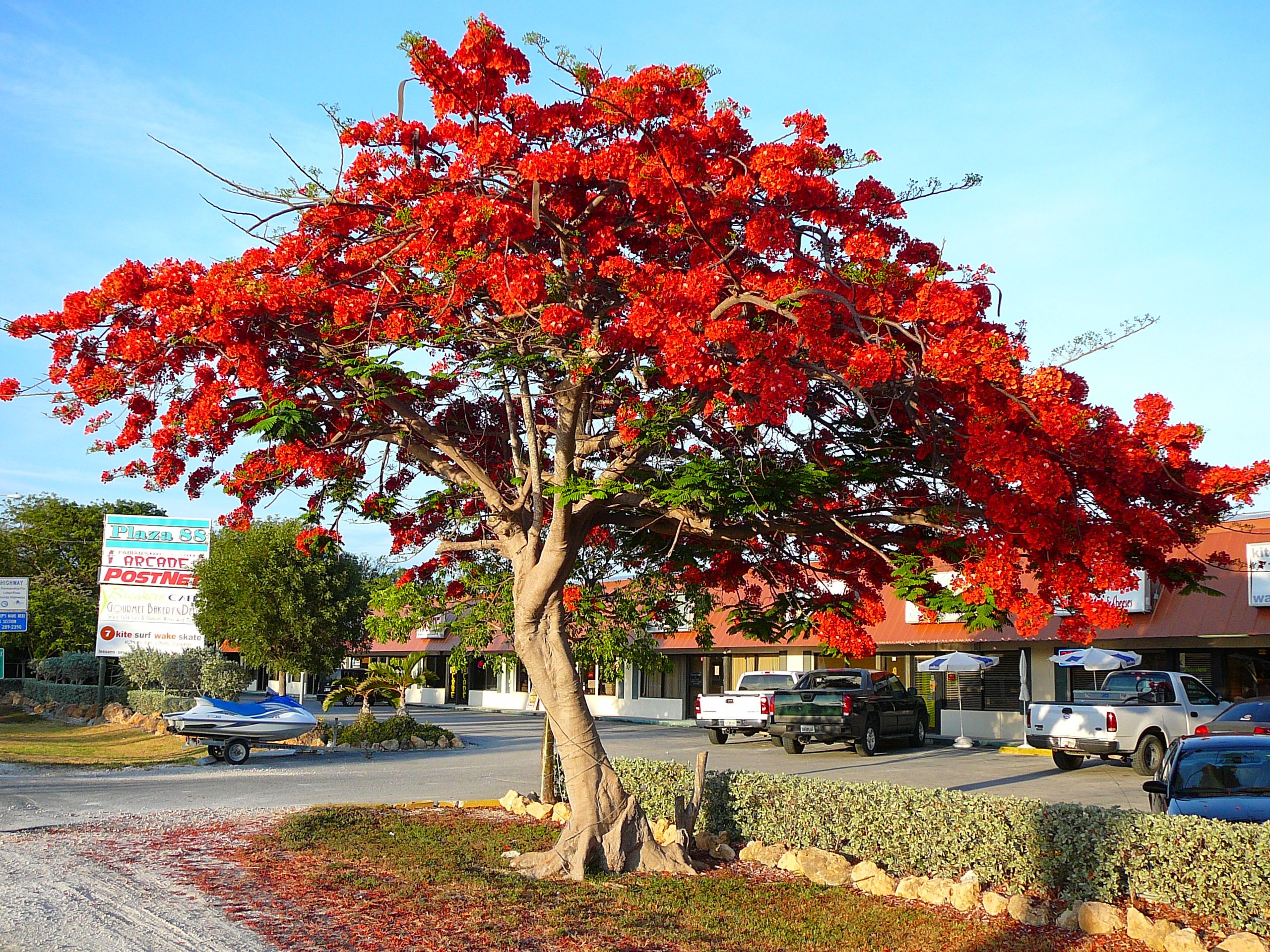
Every summer, just before the monsoon arrives, many Indian cities begin to change colour. Roadsides, parks, and institutional campuses are suddenly lined with bright red and orange blossoms that seem almost too vivid to be natural.
At the center of this transformation is the Gulmohar tree (Delonix regia), often called the Flame Tree for its striking canopy of flowers.
Known for its wide-spreading crown and seasonal blooms, the Gulmohar has become one of the most recognizable trees in urban India. While it is widely planted across tropical regions, its origins lie far from the Indian subcontinent.
Botanical records such as the Encyclopaedia Britannica overview of Gulmohar note that the tree is native to Madagascar but has been extensively naturalised in tropical and subtropical regions around the world.
Today, Gulmohar is not just a decorative tree. It plays an important role in shaping urban landscapes, microclimates, and seasonal biodiversity.
What Is the Gulmohar Tree?
The Gulmohar tree belongs to the Fabaceae (legume) family, which includes many ecologically important species known for nitrogen fixation and soil enrichment.
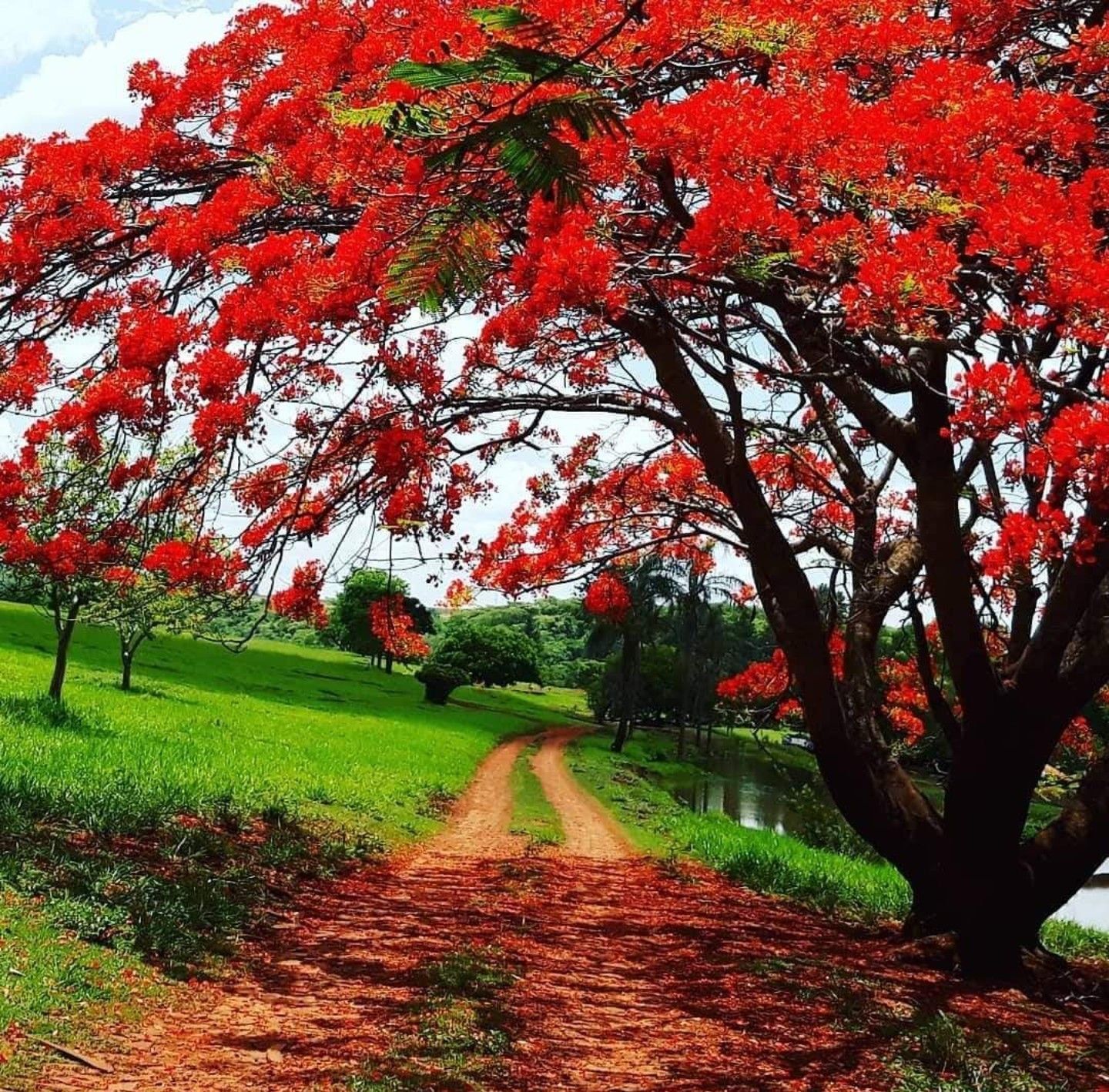
Scientifically known as Delonix regia, the tree is characterized by:
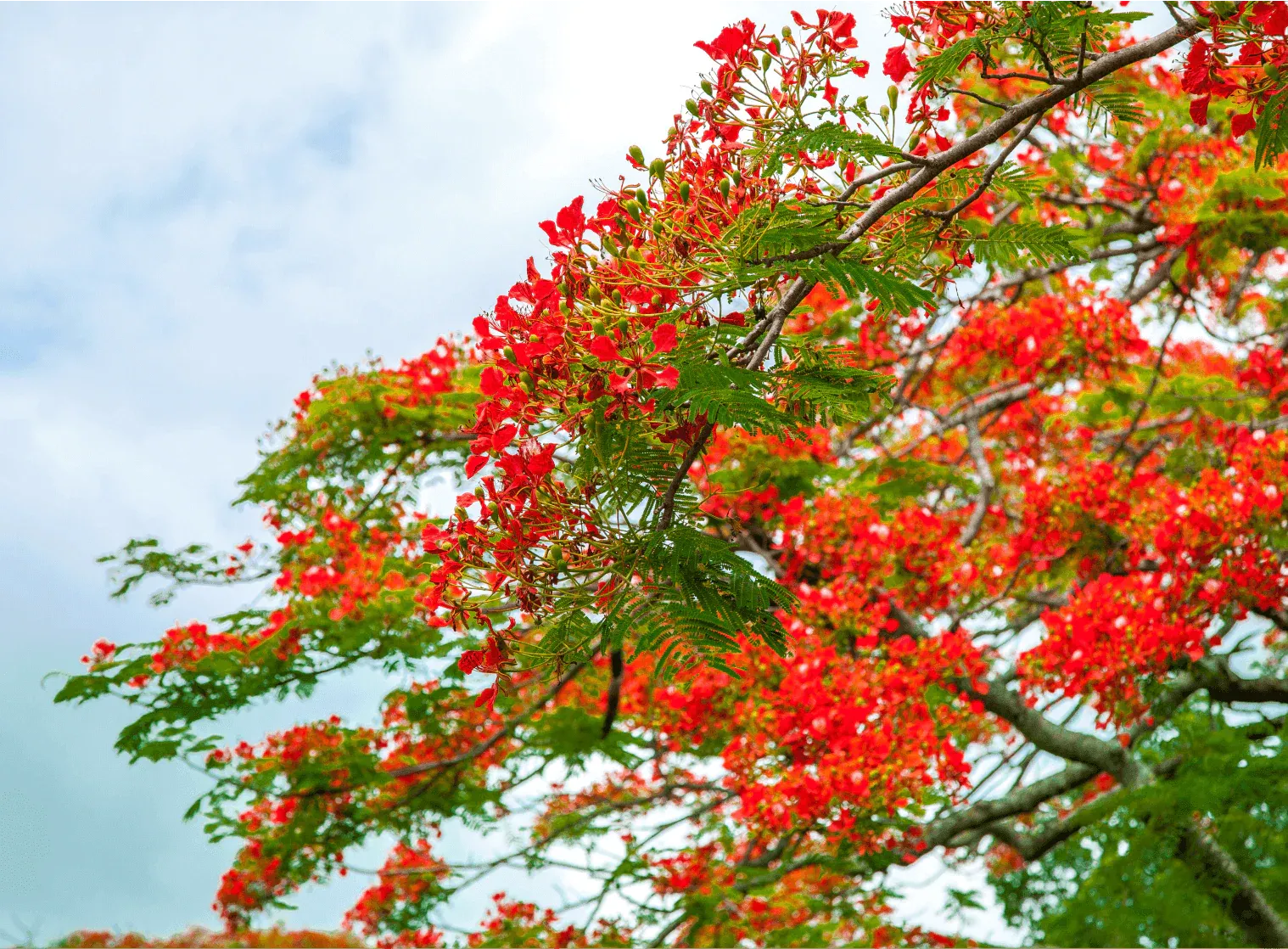
• a wide, umbrella-shaped canopy • feathery, fern-like leaves • large clusters of bright red, orange, or scarlet flowers • long, flat seed pods
Detailed plant profiles described in the CABI datasheet for Delonix regia highlight that the tree thrives in warm climates with moderate rainfall and well-drained soil. Its fast growth and visual appeal have made it a preferred choice for avenue planting, gardens, and institutional landscapes.
Why Is It Called the Flame Tree?
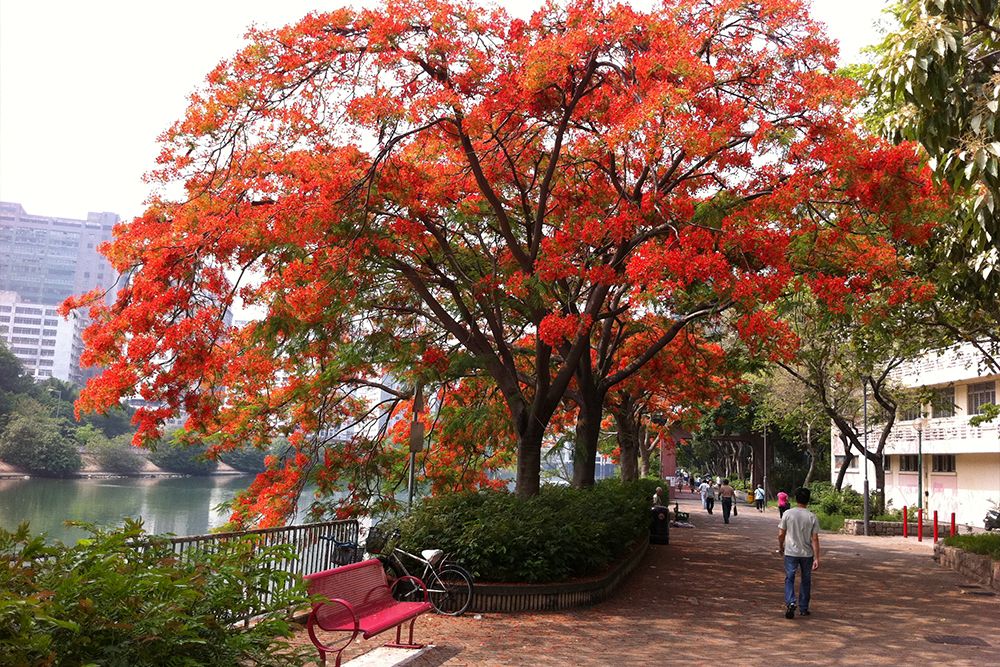
The name “Flame Tree” comes from the tree’s dramatic flowering season.
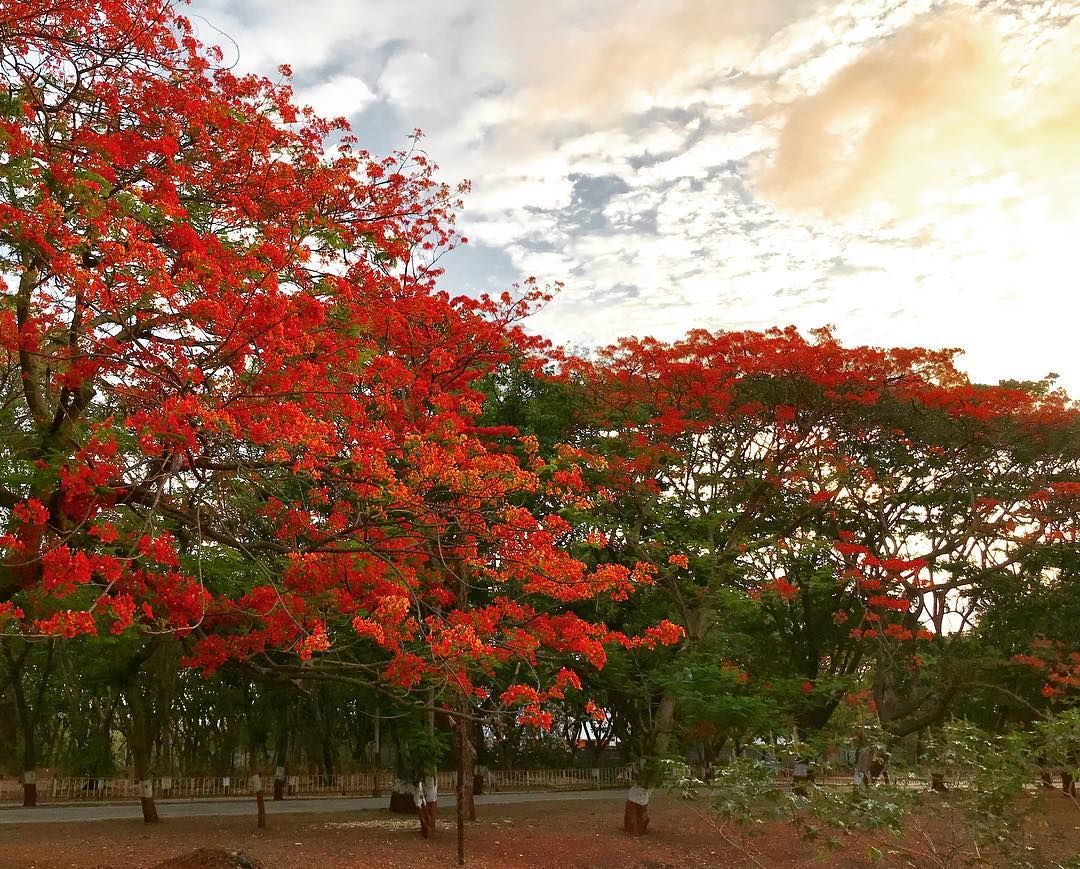
During peak summer, Gulmohar trees shed much of their foliage and burst into dense clusters of bright red and orange flowers. From a distance, the canopy appears like a mass of fire, especially when multiple trees are planted along roads.
This seasonal transformation is one of the reasons Gulmohar is widely used in landscape design and urban aesthetics.
Flowering trees like Gulmohar also play a seasonal ecological role. Research discussed in the Food and Agriculture Organization’s resources on tropical trees shows that flowering cycles aligned with seasonal changes help support pollinators when other food sources may be limited.
The Ecological Role of Gulmohar Trees

Supporting Pollinators
The bright flowers of the Gulmohar tree attract bees, butterflies, and other insects.
Although not as nectar-rich as some native species, flowering trees in urban environments provide important support to pollinators, especially in areas where natural vegetation is limited.
Urban biodiversity insights shared by World Agroforestry (ICRAF) emphasize that even ornamental trees can contribute to ecological networks when planted at scale.
Urban Cooling and Shade
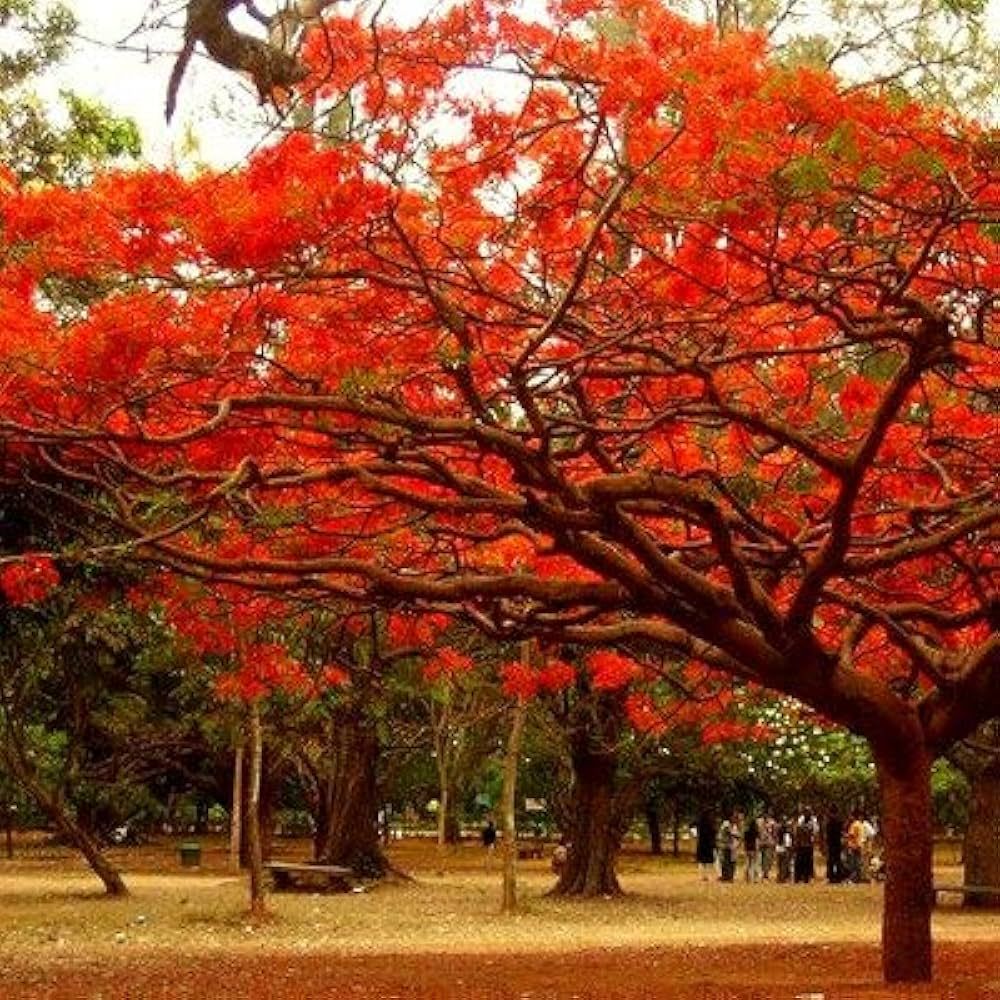
One of the most important contributions of the Gulmohar tree is its large canopy.
In cities where heat islands are becoming more intense, trees that provide dense shade play a critical role in improving thermal comfort.
Urban forestry research highlighted in the UN Environment Programme’s work on urban ecosystems shows that canopy trees can significantly reduce surface and air temperatures in built environments.
Gulmohar’s wide crown makes it particularly effective for:
• roadside shading • public parks • institutional campuses • pedestrian pathways
Improving Urban Air and Microclimates
Like most trees, Gulmohar contributes to improving air quality by trapping dust and releasing oxygen.
More importantly, it helps regulate microclimates by reducing heat and increasing humidity through transpiration.
These benefits, while often overlooked, are essential for making cities more livable.
Native vs Non-Native: An Important Perspective
While Gulmohar is deeply associated with Indian landscapes, it is not a native species.
As noted in botanical sources like the Encyclopaedia Britannica entry on Delonix regia, the tree originates from Madagascar and was introduced to India during colonial times.
This raises an important ecological discussion.
Native trees are generally better adapted to local ecosystems and tend to support a wider range of biodiversity. Conservation efforts globally, including those highlighted by the UN Decade on Ecosystem Restoration, emphasize prioritising native species for long-term ecological restoration.
However, this does not mean Gulmohar has no value.
In urban environments where conditions are already altered, non-native trees like Gulmohar can still play a meaningful role in providing shade, visual identity, and partial ecological support.
The key is balance — integrating Gulmohar alongside native species rather than relying on it exclusively.
Limitations of the Gulmohar Tree
A more honest understanding of the Gulmohar tree also requires acknowledging its limitations.
Fragile Wood Structure Gulmohar trees have relatively brittle branches, which makes them vulnerable to strong winds and storms. This is particularly relevant in coastal or high-wind regions.
Seasonal Leaf Drop The tree sheds leaves before flowering, which can lead to temporary litter in urban areas. While this is part of its natural cycle, it requires maintenance in city environments.
Limited Biodiversity Support Compared to Native Trees
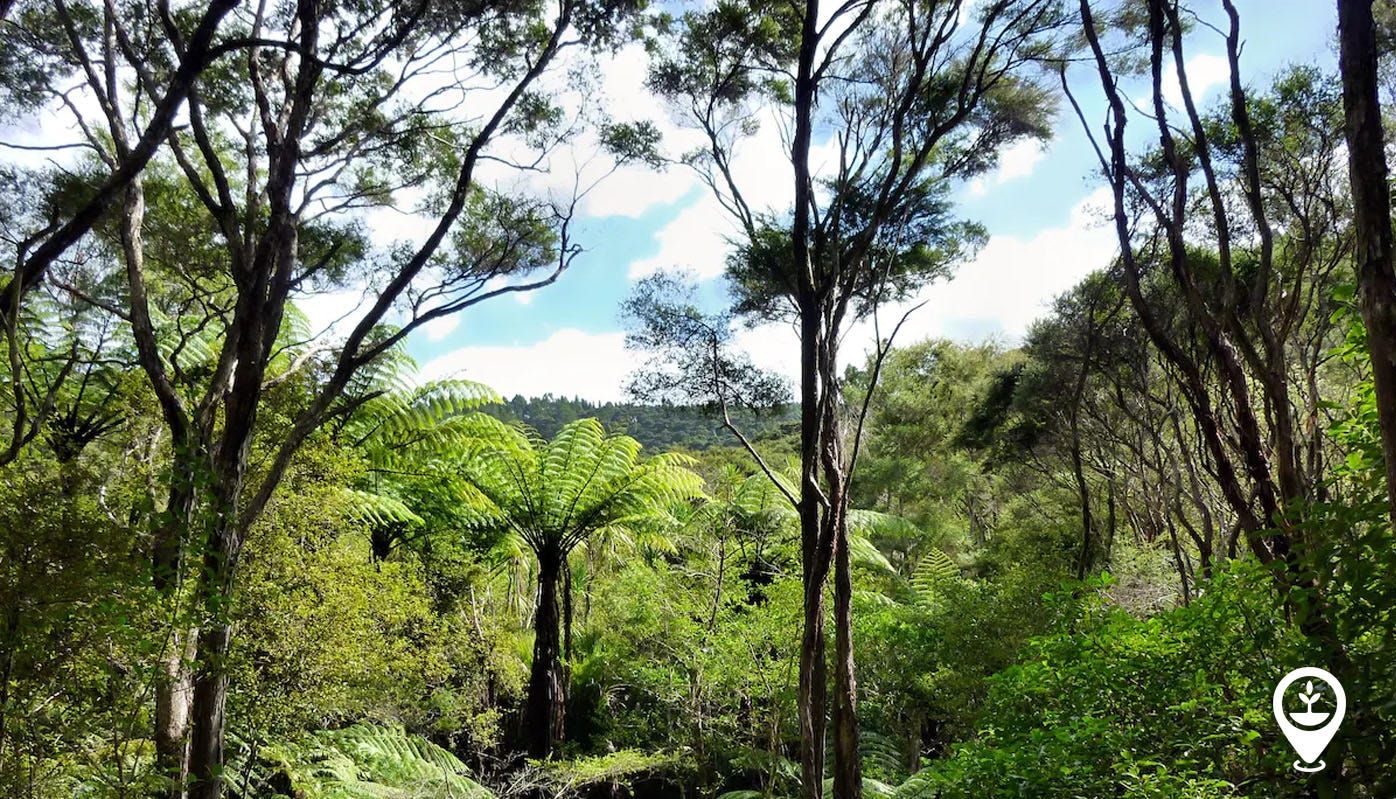
Because it is not native, Gulmohar does not support as many local species as indigenous trees would.
Ecological studies referenced by World Agroforestry suggest that native species typically provide more complex habitat and food sources for wildlife.
Why Gulmohar Still Matters in Cities
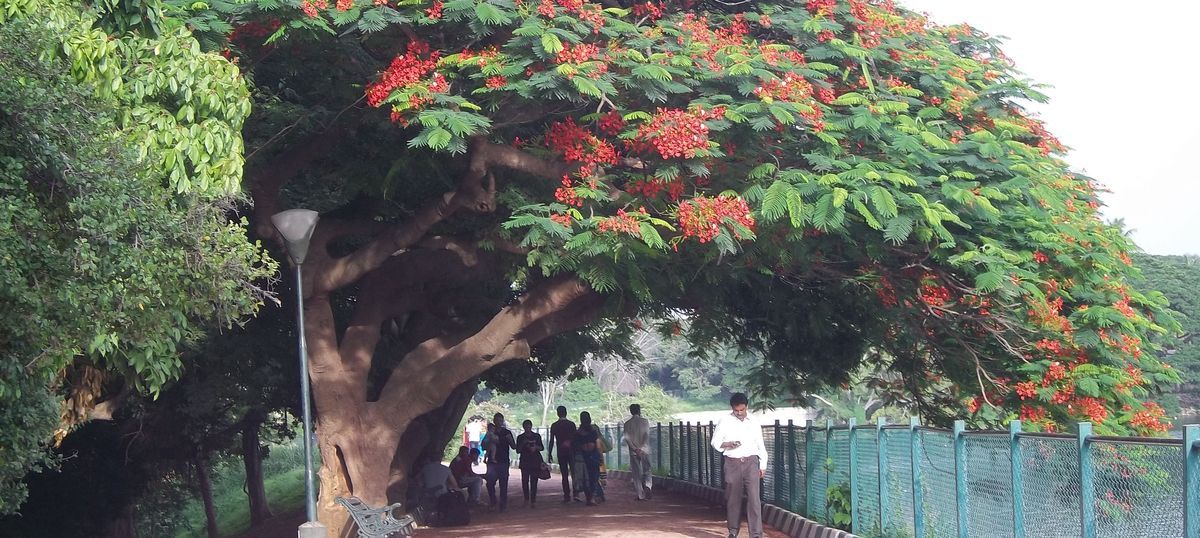
Despite these limitations, Gulmohar continues to be an important part of urban landscapes.
Its value lies in:
• providing immediate visual and environmental impact • creating shaded public spaces • enhancing urban aesthetics • contributing to seasonal identity in cities
In many ways, Gulmohar represents a bridge between function and beauty.
Urban planning is not only about ecological optimisation but also about creating spaces that people connect with. Trees like Gulmohar make cities feel alive, especially during peak summer when greenery is otherwise limited.
Towards Better Urban Tree Planning
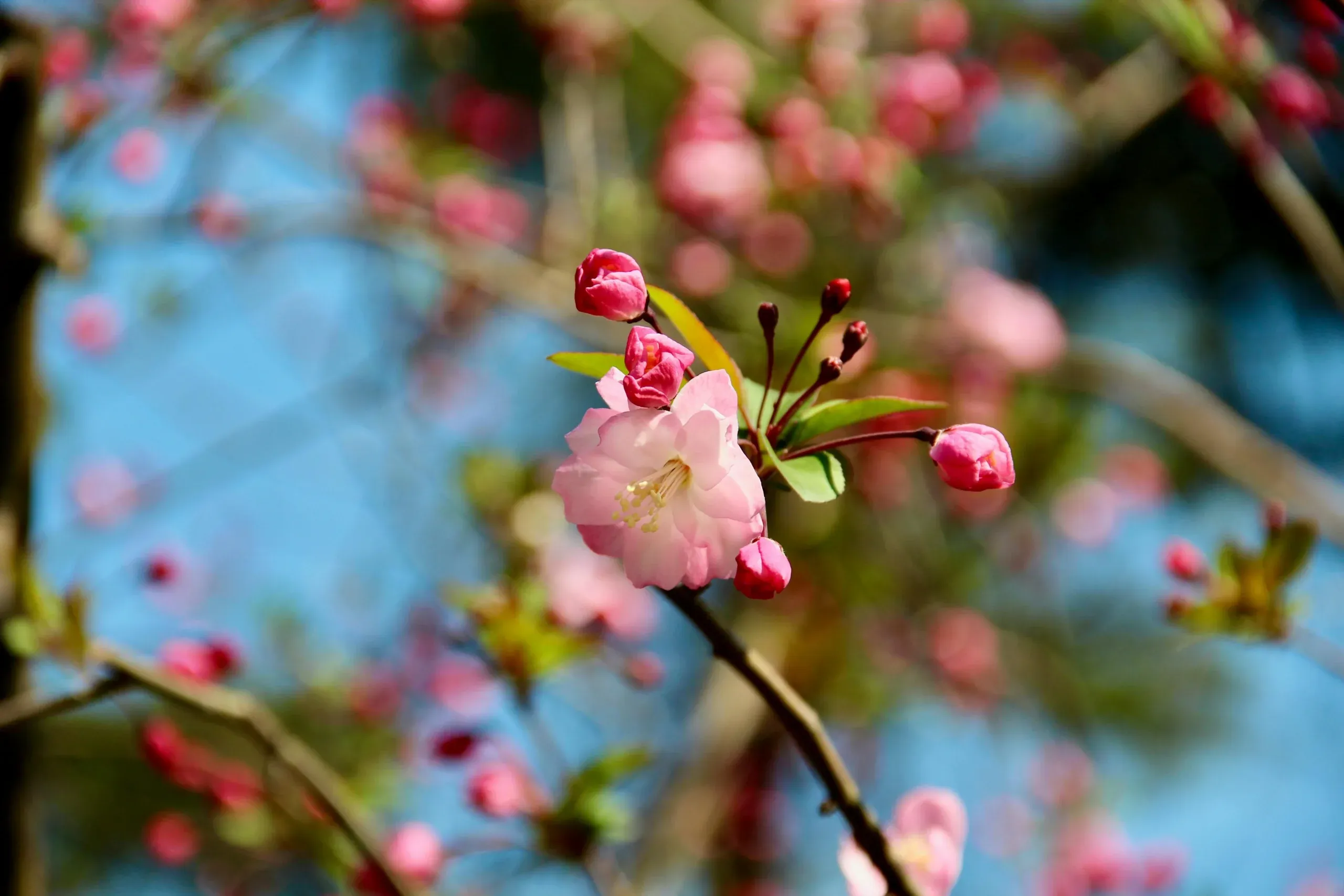
The conversation around trees in cities is evolving.
Instead of choosing between native and ornamental species, urban forestry is increasingly focusing on diverse, layered planting strategies.
This includes:
• prioritising native trees for ecological resilience • integrating ornamental trees like Gulmohar for visual and seasonal value • designing mixed green corridors that support both people and biodiversity
Insights from the UN Environment Programme’s restoration initiatives highlight that cities need a combination of ecological function and human-centered design to build sustainable landscapes.
A Tree That Defines Summer
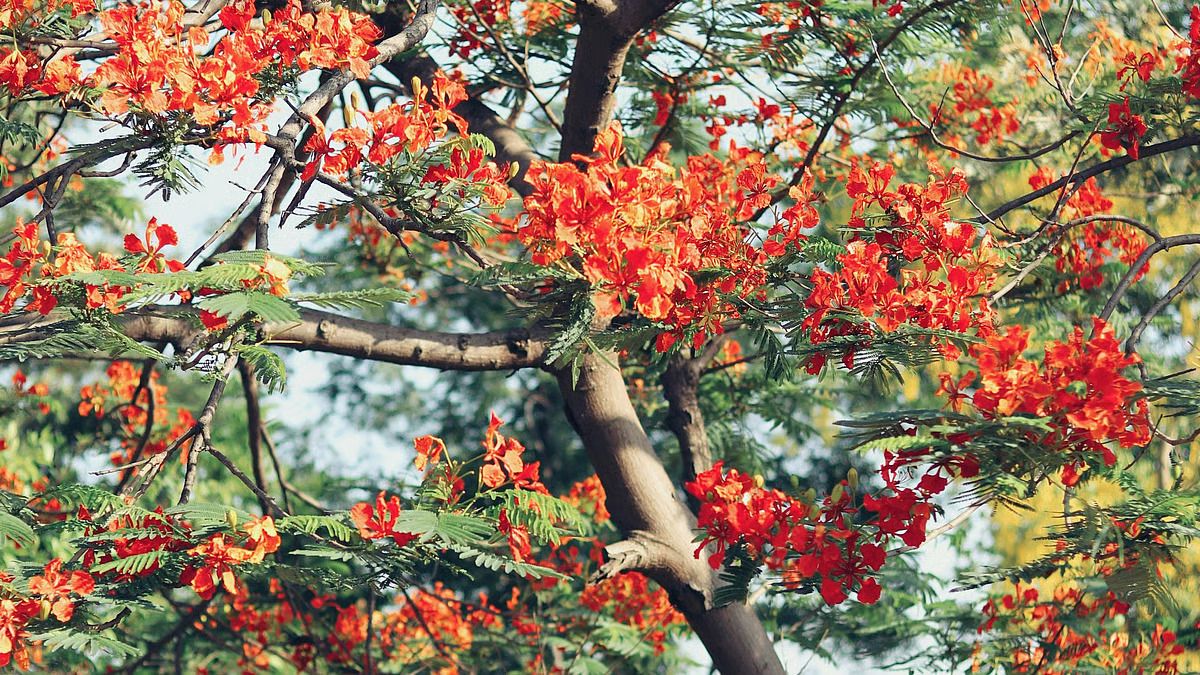
The Gulmohar tree is more than just a flowering species.
It is a marker of seasons, a source of shade, and a defining feature of many Indian streetscapes.
While it may not be native, its presence has become deeply embedded in the visual and cultural identity of urban India.
As cities continue to grow and adapt to climate challenges, the role of trees will become even more important.
And every summer, when the Gulmohar blooms again, it serves as a reminder that even in dense urban environments, nature still finds a way to make itself visible.
FAQs
1. What is the Gulmohar tree?
The Gulmohar tree (Delonix regia) is a tropical flowering tree known for its bright red and orange blooms and wide umbrella-shaped canopy. It is commonly planted in urban areas for shade and visual appeal.
2. Why is Gulmohar called the Flame Tree?
Gulmohar is called the Flame Tree because its vibrant red and orange flowers cover the entire canopy during summer, giving it a flame-like appearance.
3. Is the Gulmohar tree native to India?
No, the Gulmohar tree is native to Madagascar. However, it has been widely naturalised and planted across India due to its adaptability and ornamental value.
4. When does the Gulmohar tree bloom?
The Gulmohar tree typically blooms during the summer months, especially between April and June, just before the monsoon season begins.
5. What are the benefits of the Gulmohar tree?
Gulmohar trees provide shade, reduce urban heat, improve air quality, and enhance the visual landscape of cities. They also support pollinators like bees and butterflies.
6. How tall does a Gulmohar tree grow?
A Gulmohar tree usually grows between 10 to 15 meters in height, with a wide-spreading canopy that can extend even further.
7. Is the Gulmohar tree good for urban planting?
Yes, Gulmohar is widely used in urban landscaping because it grows quickly, provides dense shade, and thrives in tropical climates.
8. What are the disadvantages of the Gulmohar tree?
Gulmohar trees have brittle branches that can break in strong winds. They also shed leaves seasonally and support less biodiversity compared to native trees.
9. Does the Gulmohar tree support biodiversity?
Gulmohar trees attract pollinators such as bees and butterflies, but they are less effective in supporting biodiversity compared to native tree species.
10. Where does the Gulmohar tree grow best?
The Gulmohar tree grows best in tropical and subtropical climates with full sunlight and well-drained soil. It thrives in warm regions with moderate rainfall.