Every summer feels harsher than the last.
Across Indian cities, temperatures regularly cross 40°C, and in many places, the heat lingers well into the night. But what people experience is not just rising temperatures — it is the way cities trap and amplify heat.
Concrete roads, glass buildings, and asphalt surfaces absorb sunlight throughout the day and release it slowly after sunset. This creates what is known as the urban heat island effect, where cities remain significantly warmer than surrounding rural areas. As explained in the UN Environment Programme’s work on urban heat, built environments without vegetation can increase local temperatures by several degrees.
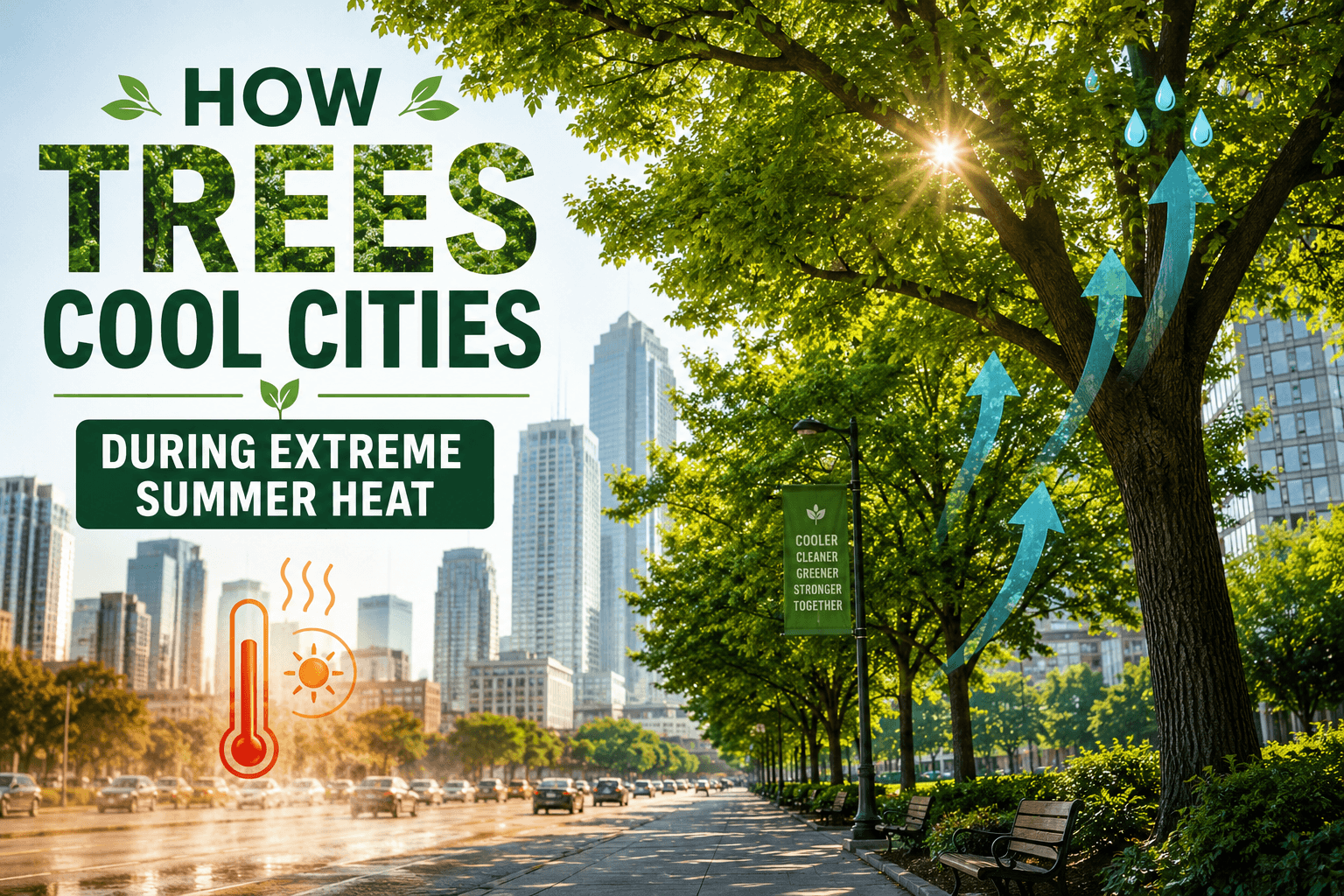
In this context, trees are not just part of the landscape. They are one of the most effective natural systems for cooling cities.
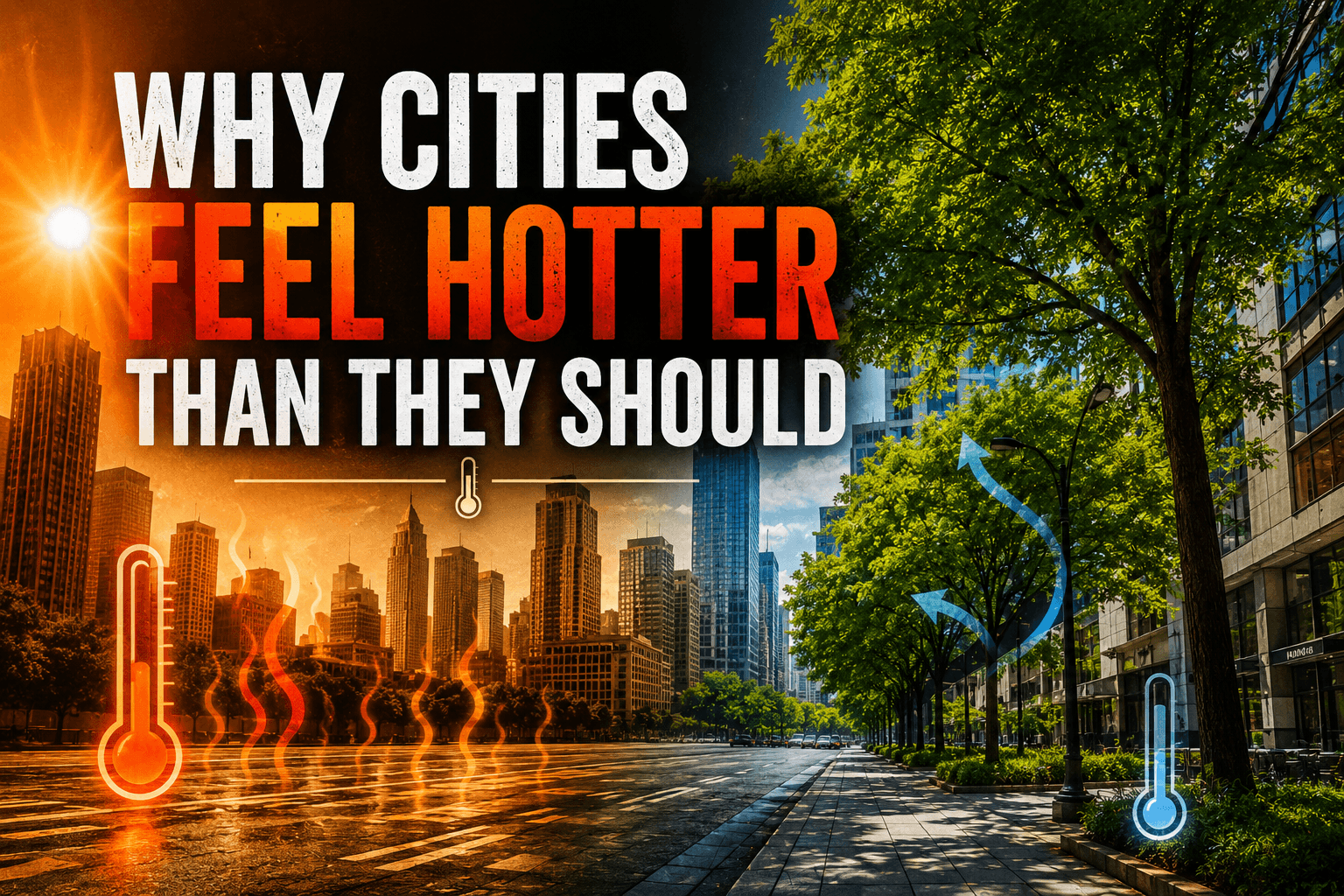
Why Cities Feel Hotter Than They Should
To understand how trees help, it is important to understand the problem first.
Urban areas heat up faster because:
• hard surfaces absorb and store heat
• lack of vegetation reduces natural cooling
• limited airflow traps warm air
• built structures prevent heat from escaping
Research from the Environmental Protection Agency’s urban heat island studies shows that surfaces like roads and rooftops can become significantly hotter than surrounding air, intensifying heat stress for people.
This is why stepping from a shaded street into an open road feels like entering a different environment.
How Trees Actually Cool Temperature
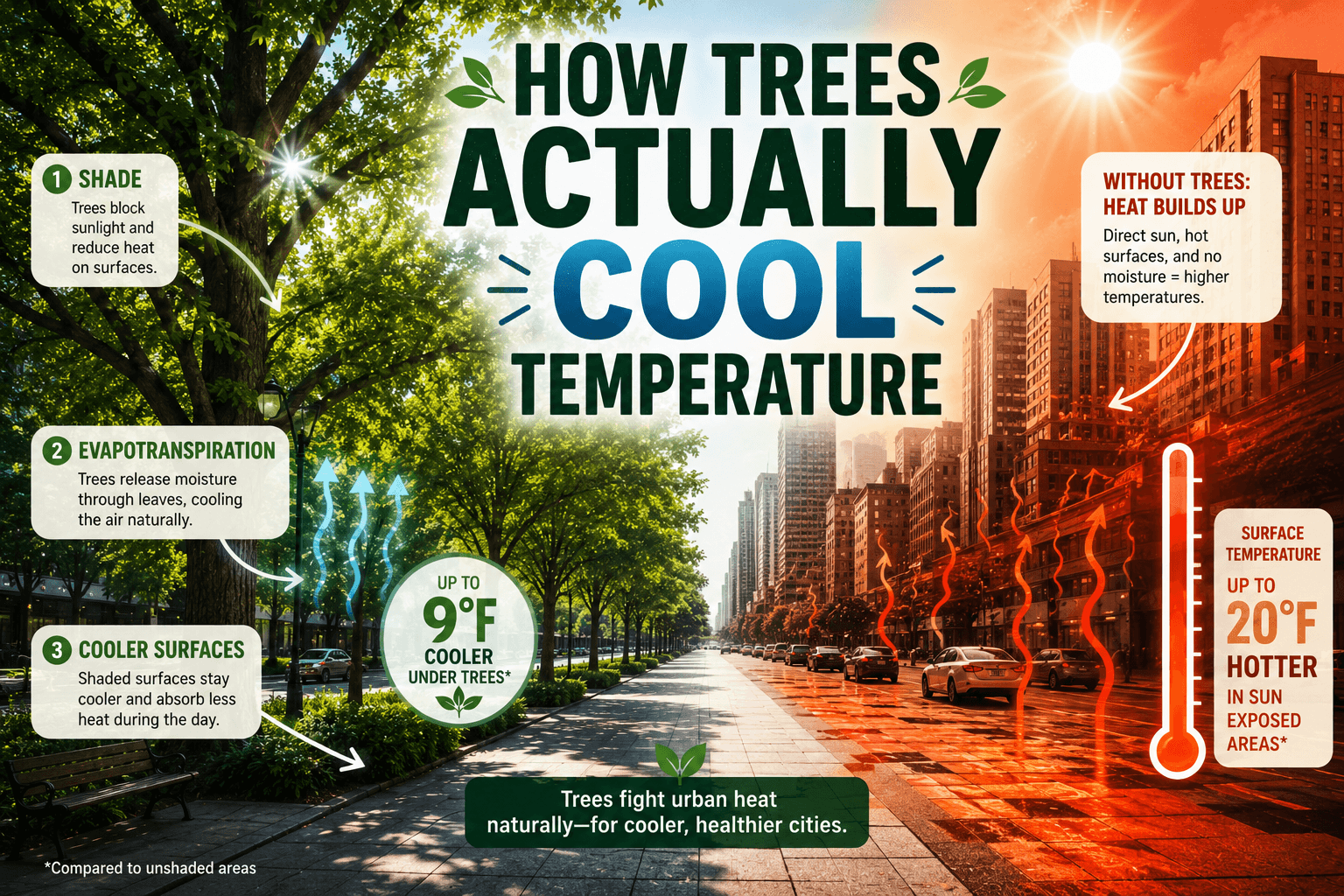
Trees do not cool cities in just one way. Their impact comes from a combination of natural processes working together.
Shade: The Most Immediate Cooling Effect
The most visible role of trees is providing shade.
Tree canopies block direct sunlight from reaching surfaces like roads, buildings, and pavements. This reduces the amount of heat absorbed by these materials.
Studies referenced in the Food and Agriculture Organization resources on urban forestry show that shaded surfaces can be significantly cooler than those exposed to direct sunlight.
This is why even a single tree-lined street can feel dramatically different from an open one.
Evapotranspiration: Nature’s Cooling System
Trees also cool the air through a process called evapotranspiration.
They release water vapor from their leaves, which absorbs heat from the surrounding air as it evaporates. This results in a natural cooling effect.
Scientific explanations from the US Geological Survey on evapotranspiration describe this as one of the key processes that regulate local temperatures in vegetated areas.
Unlike artificial cooling systems, this process works continuously without energy input.
Reducing Heat Storage in Cities
Trees prevent heat from being stored in urban materials.
Without tree cover, surfaces like concrete and asphalt absorb large amounts of heat during the day and release it at night. This is what keeps cities warm even after sunset.
With tree cover, much of this heat never reaches the ground, reducing both daytime temperatures and nighttime heat retention.
Improving Microclimates
When multiple trees grow together, they create microclimates — small zones where temperature, humidity, and airflow differ from surrounding areas.
These microclimates can significantly improve comfort, especially during extreme heat conditions.
Urban climate research from the UNEP highlights that green spaces can act as cooling pockets within cities.
Cooling Cities in Practice: The Role of Urban Dense Forests
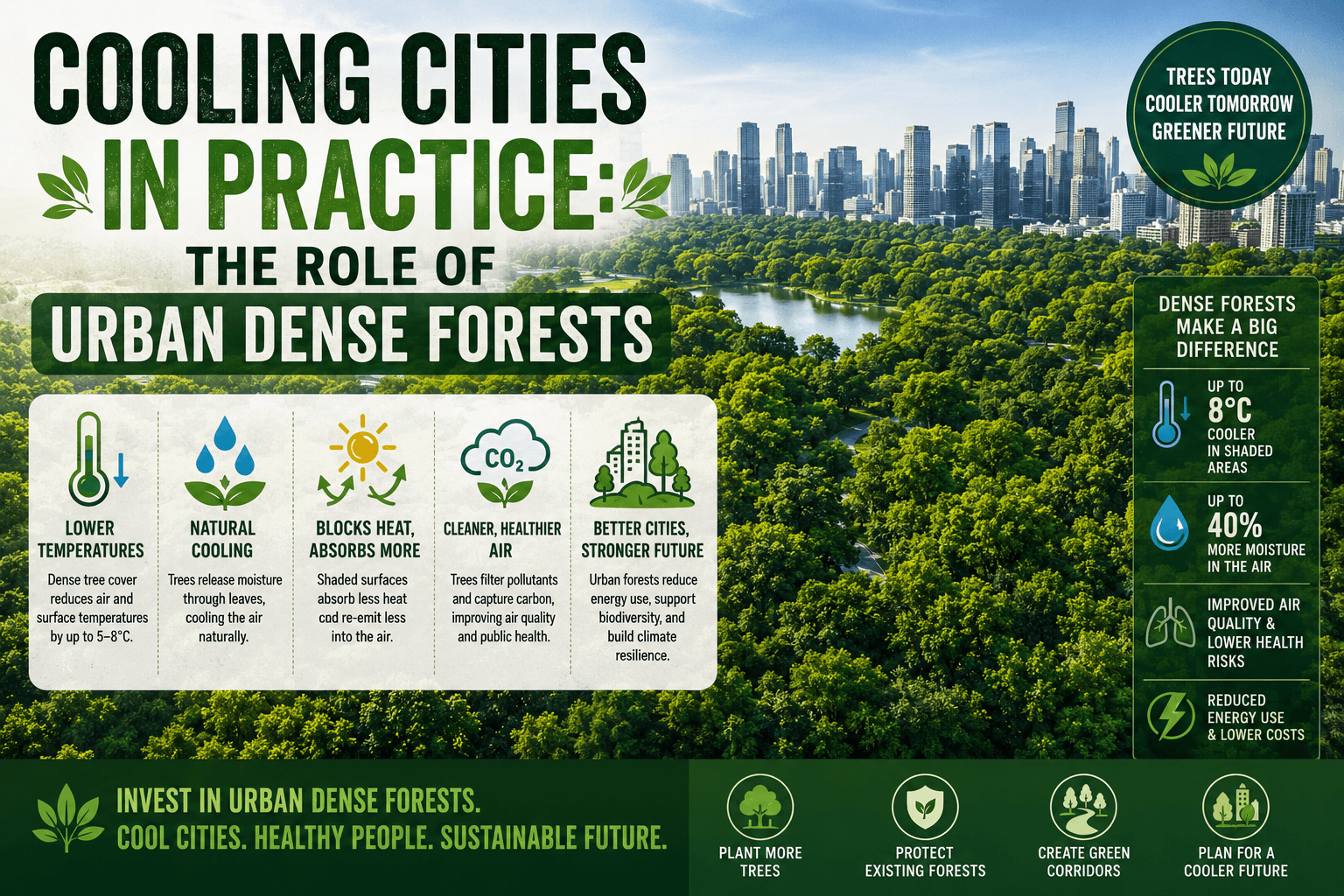
While the science behind trees is clear, its real impact is best understood on the ground.
Across India, CATCH Foundation has developed 200+ urban dense forests, transforming unused or degraded urban land into high-density green ecosystems.
These are not conventional plantations. They are designed with high-density native species, layered planting, and long-term maintenance — allowing them to function as compact ecological systems.
Within these forest patches, the difference is noticeable.
Compared to surrounding built areas:
• ground temperatures are lower
• direct heat exposure is reduced
• air feels cooler and more breathable
• humidity levels are more balanced
These forests act as localized cooling zones, especially in cities where open green spaces are limited.
As they mature, their impact becomes stronger — not just in temperature reduction, but also in improving air quality and supporting biodiversity.
Why This Matters During Peak Summer Heat
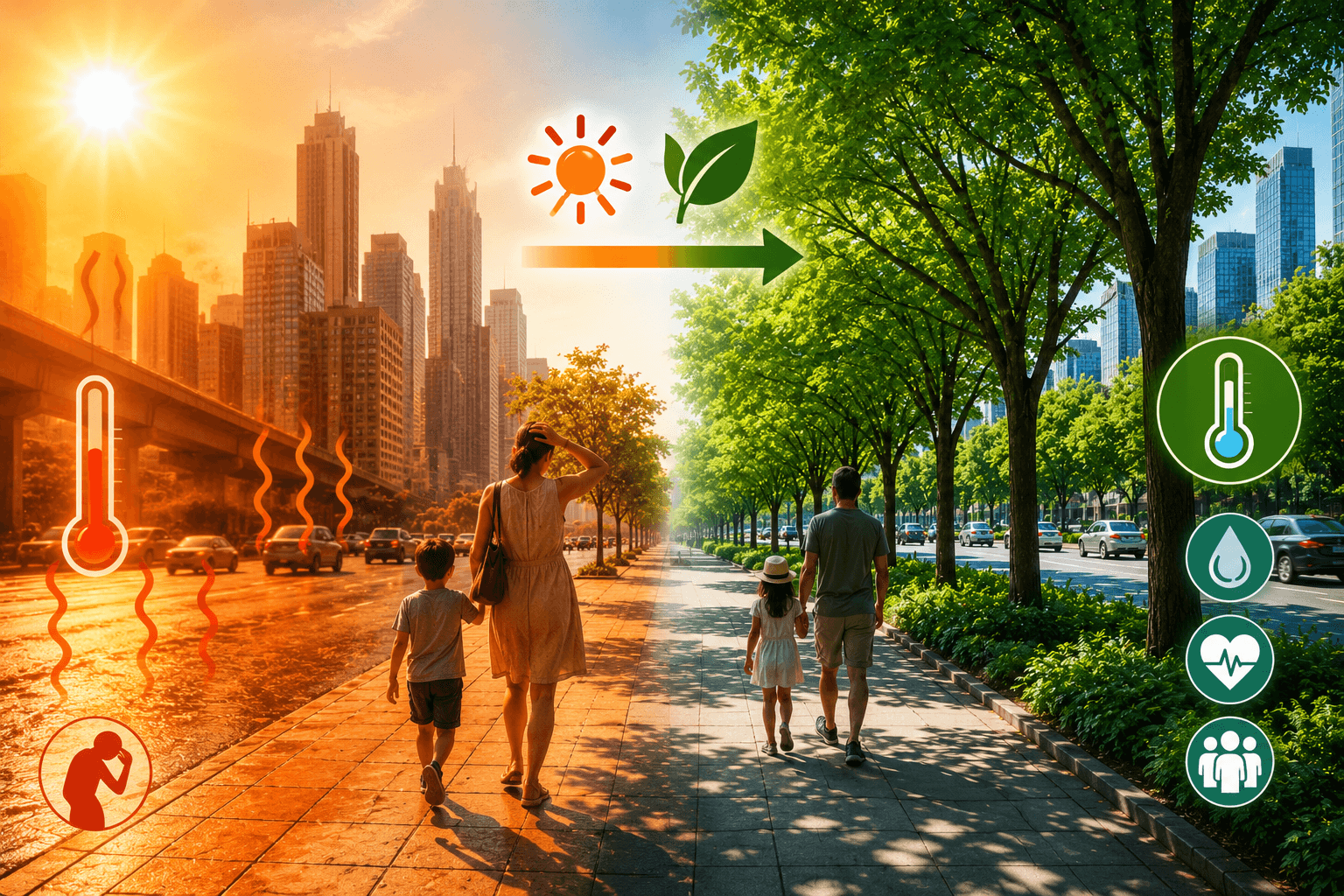
During extreme summer conditions, the challenge is not just high temperature — it is the lack of relief.
Urban dense forests address this by:
• reducing heat buildup during the day
• preventing excessive heat retention at night
• creating shaded, usable spaces
• offering immediate temperature relief
Even a 2 to 4°C reduction within these areas can significantly improve comfort and reduce heat stress.
This aligns with findings from the UNEP urban climate research, which emphasizes the role of vegetation in reducing urban heat extremes.
Where Trees Make the Biggest Difference
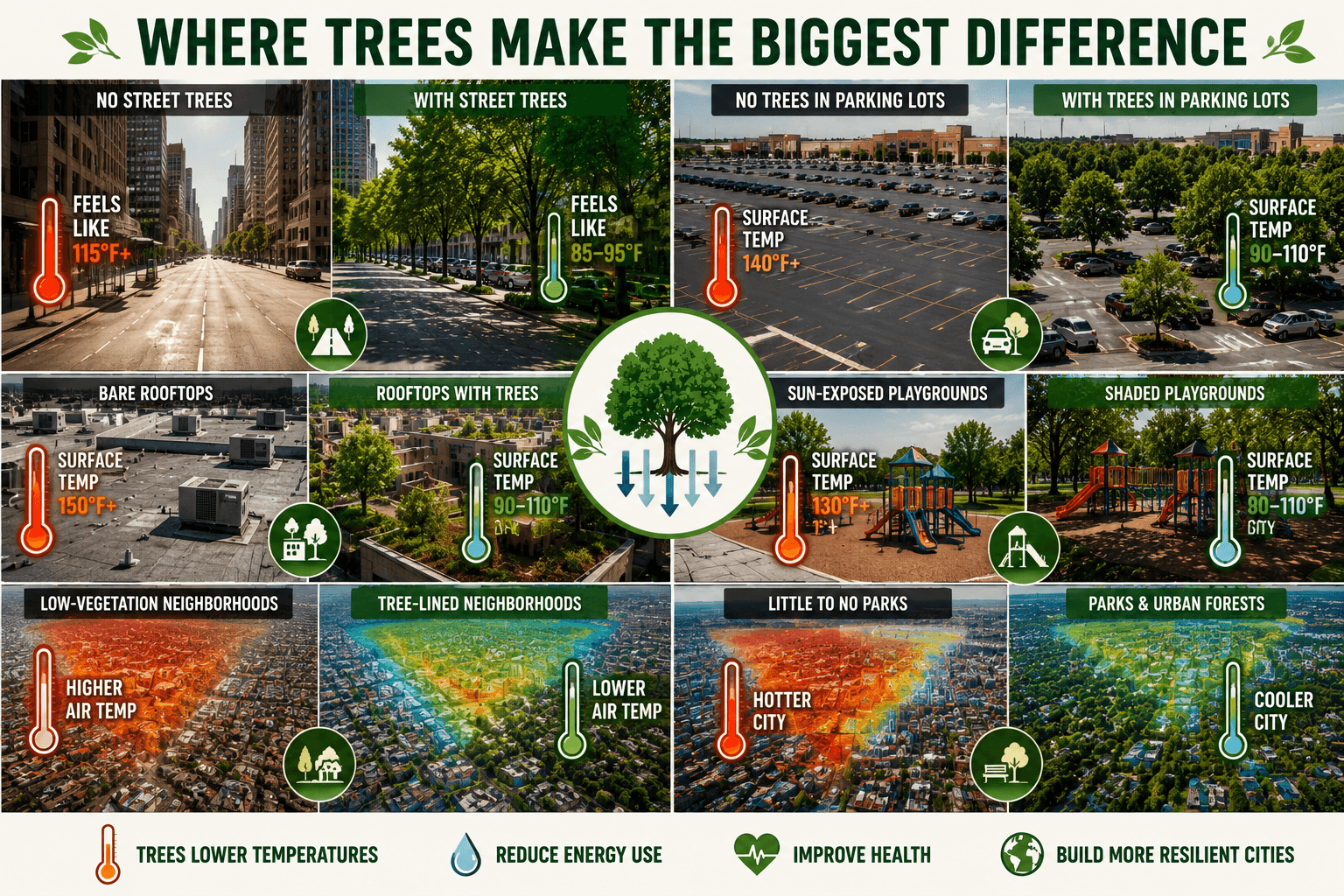
Not all tree cover has the same impact.
Cooling effects are strongest in:
Streets and Roads
- Tree-lined streets reduce surface temperatures and make outdoor movement more comfortable.
Residential Areas
- Trees around homes reduce heat absorption, helping lower indoor temperatures.
Public Spaces
- Parks and dense plantations act as cooling buffers within cities.
Dense Urban Zones
- High-density plantations, like urban forests, create concentrated cooling effects in limited spaces.
What Happens When Trees Are Missing
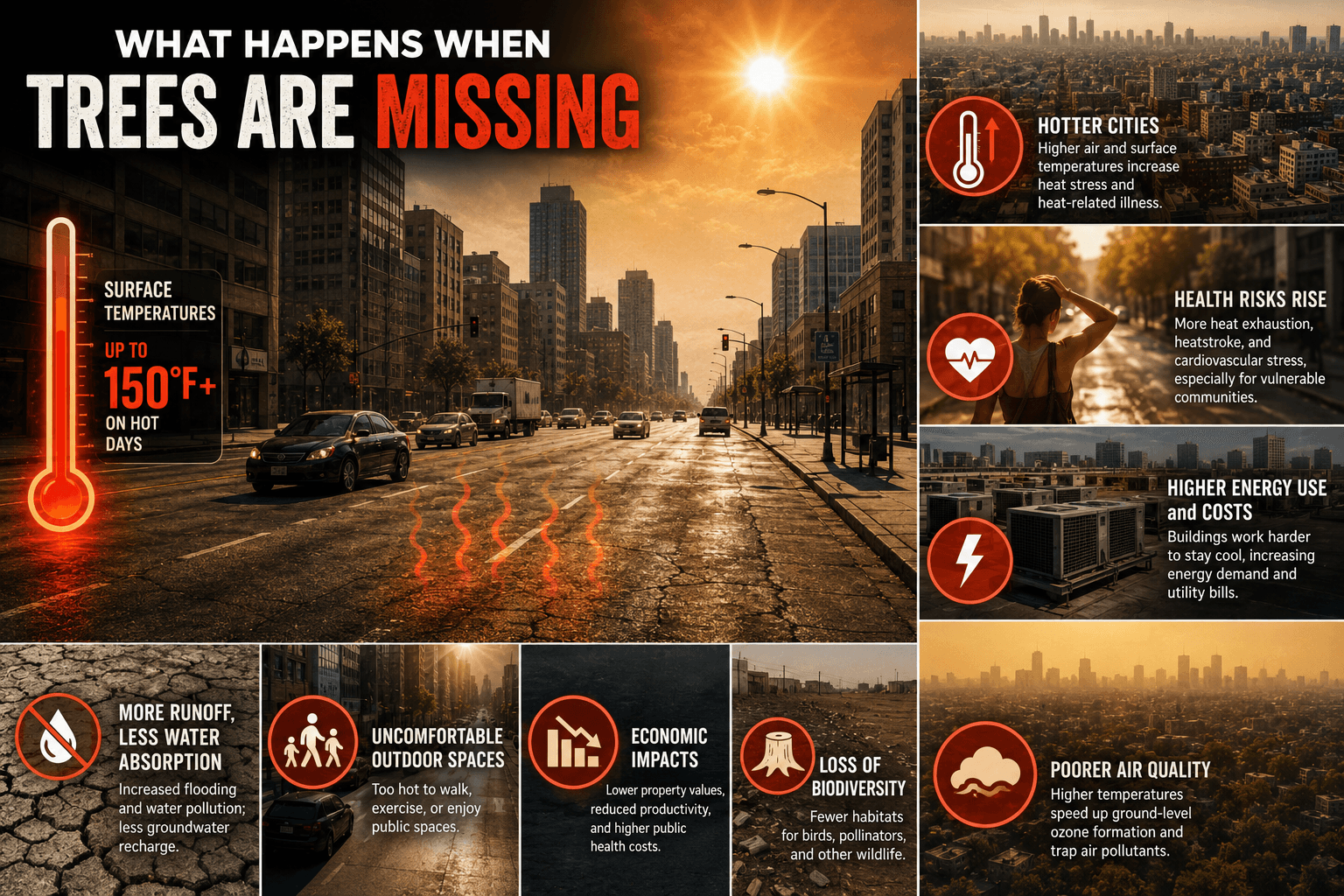
The absence of trees does more than remove shade.
It leads to:
• higher surface temperatures
• faster soil drying
• increased heat retention
• reduced air quality
Over time, this creates environments that are not only uncomfortable but also harder to live in.
It’s Not Just About Planting More Trees
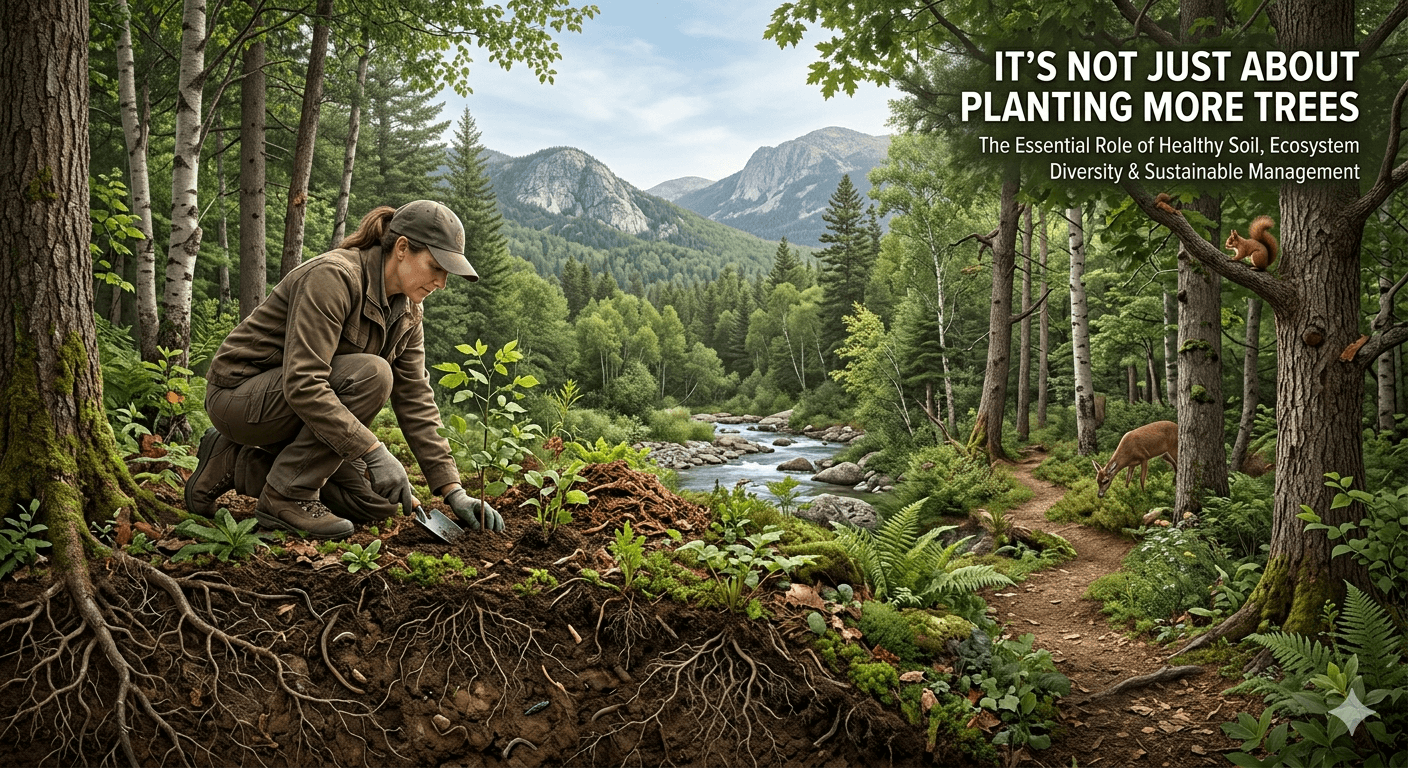
A common mistake is to think that any tree planting will solve the problem.
In reality, cooling depends on:
• species selection
• canopy density
• placement within the city
• long-term maintenance
Urban forestry insights from the Food and Agriculture Organization emphasize that planned tree cover is far more effective than scattered planting.
This is where approaches like dense urban forests become important — they maximize impact within limited space.
A Natural Solution Already Around Us
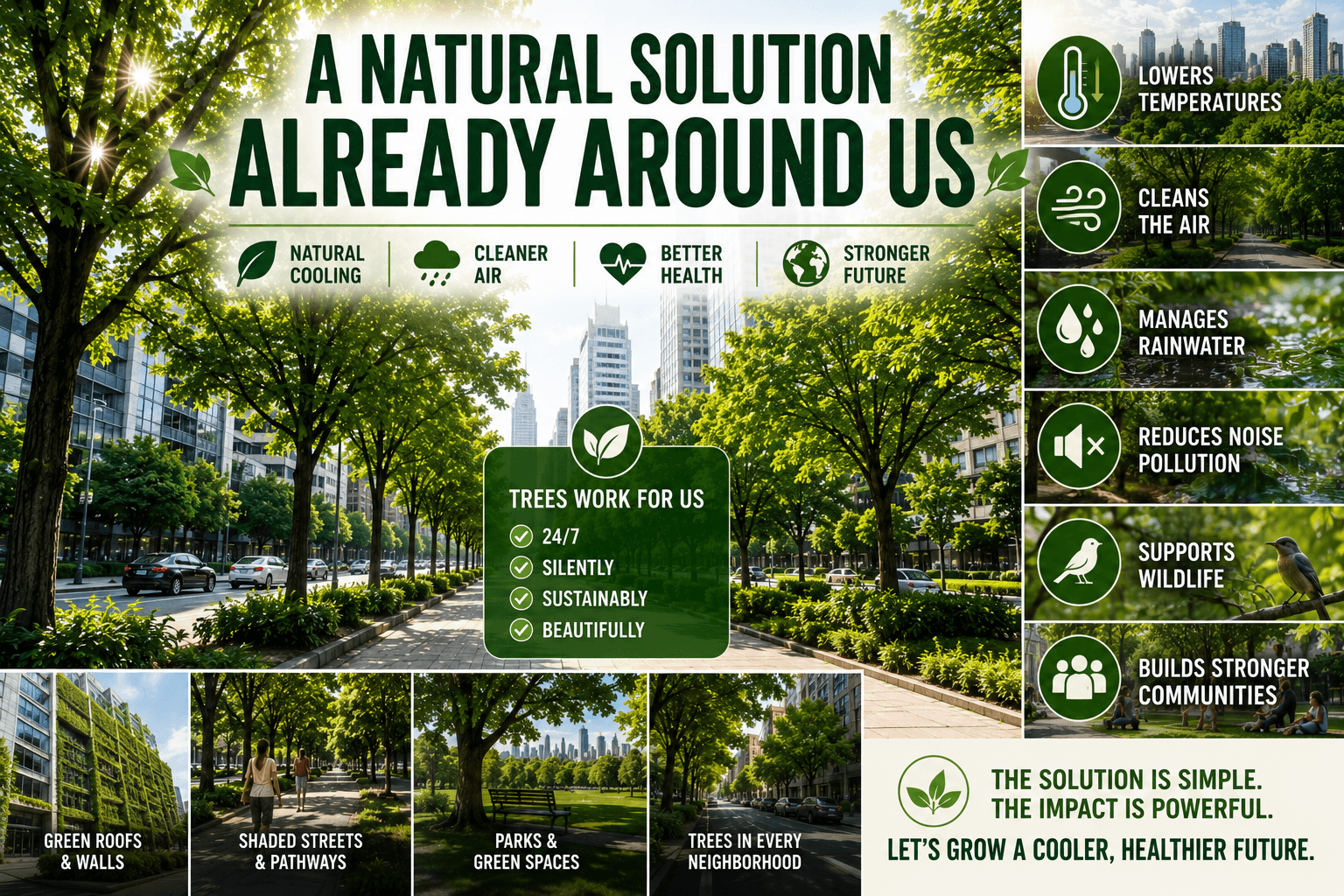
Trees do not require technology or energy to function.
They regulate temperature, improve air quality, and support ecosystems — all through natural processes.
In a time when cities are searching for solutions to rising heat, trees remain one of the most practical and scalable answers.
Sometimes, the solution is not something we need to build — it is something we need to grow.
FAQs
1. How do trees cool cities during summer?
Trees cool cities by providing shade, reducing heat absorption, and releasing water vapor through evapotranspiration, which lowers surrounding temperatures.
2. How much can trees reduce temperature?
Trees can reduce temperatures by 2–5°C in urban areas, with even greater cooling in shaded and densely planted zones.
3. What is the urban heat island effect?
The urban heat island effect occurs when cities become hotter than surrounding areas due to concrete surfaces and lack of vegetation.
4. Why are trees important in cities during summer?
Trees reduce heat, improve air quality, and create more comfortable living conditions during extreme temperatures.
5. Do trees reduce indoor temperature?
Yes, trees around buildings reduce heat absorption and can help lower indoor temperatures naturally.
6. What is evapotranspiration in trees?
Evapotranspiration is the process where trees release water vapor, cooling the surrounding air naturally.
7. Where should trees be planted for maximum cooling?
Trees should be planted along roads, near buildings, and in dense clusters for maximum cooling impact.
8. Are urban forests more effective than single trees?
Yes, dense urban forests create stronger cooling effects by forming microclimates and increasing canopy cover.
9. Can trees help during heatwaves?
Trees help reduce the intensity of heatwaves locally by lowering temperatures and providing shaded areas.
10. Is planting trees enough to cool cities?
No, proper planning, species selection, and maintenance are essential for effective cooling.