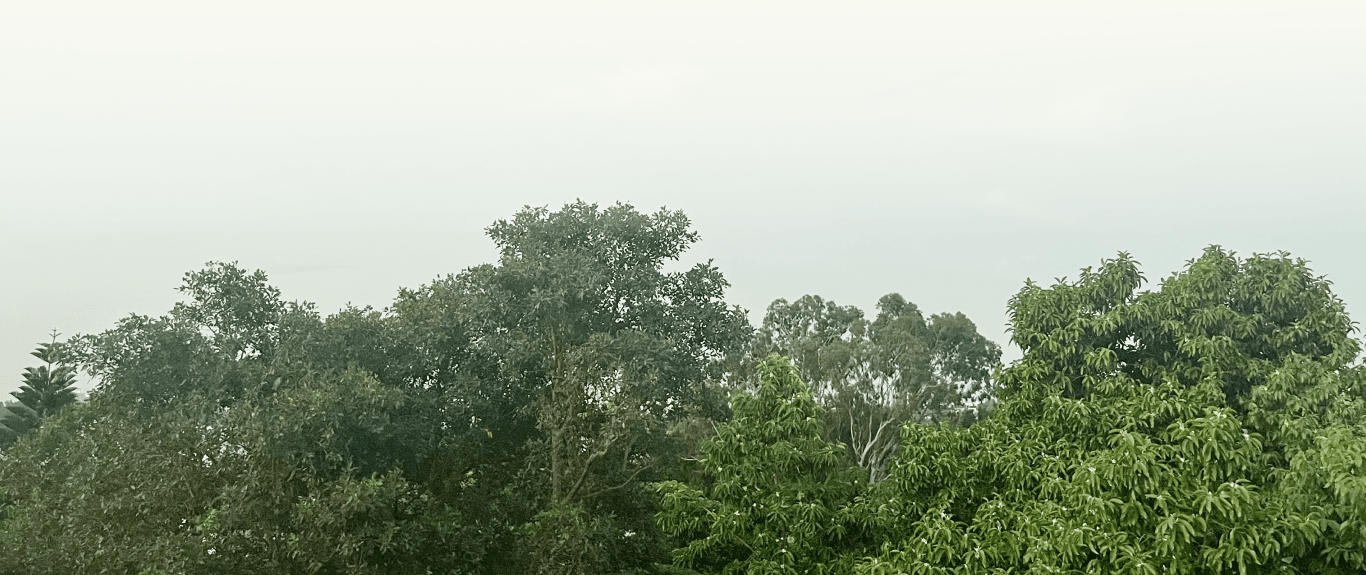
Strength, Water, and Endurance Along India’s Rivers
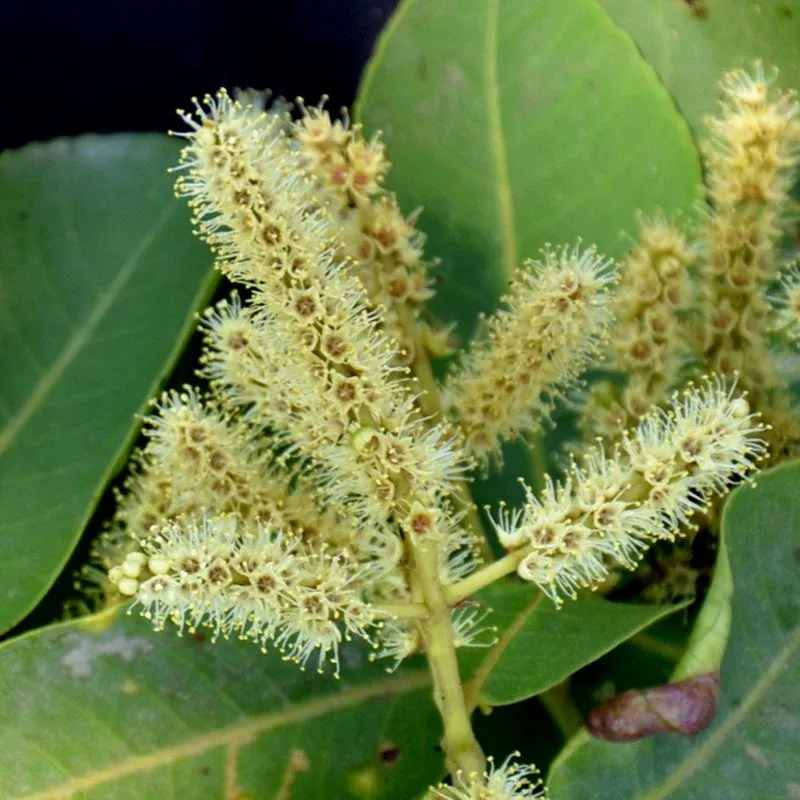
The Arjuna tree is not a tree of spectacle. It does not rely on colour, fragrance, or seasonal drama to mark its presence. Instead, it stands with a different kind of authority—quiet, grounded, and deeply tied to water.
Known botanically as Terminalia arjuna, the Arjuna tree is native to the Indian subcontinent and has long been associated with riverbanks, floodplains, and moist forests. Its relationship with water shapes everything about it: how it grows, where it survives, and why it continues to matter.
A tree shaped by flowing landscapes
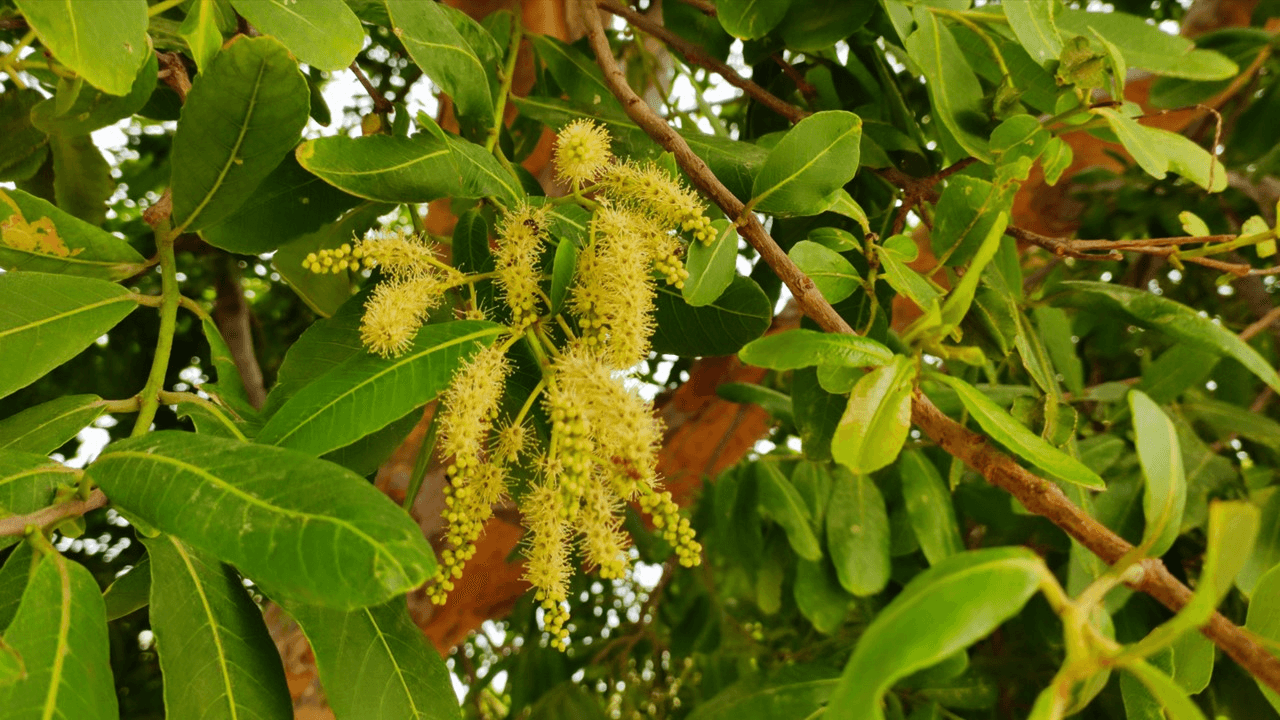
The Arjuna tree evolved in environments that change constantly.
Riverbanks flood, recede, erode, and rebuild. Soil shifts. Water levels rise and fall. In such conditions, survival depends on resilience rather than speed. The Arjuna tree responds with a strong, buttressed trunk, spreading roots, and a structure designed to withstand both saturation and drought.
This is why Arjuna trees are commonly found along rivers such as the Ganga, Narmada, and Godavari. Their roots stabilise soil, reduce erosion, and help anchor riverbanks during seasonal floods. Over time, the tree becomes part of the river system itself rather than a passive bystander.
The close association between Terminalia arjuna and riparian ecosystems is well documented in botanical records of Indian forest species, including regional descriptions maintained by the Botanical Survey of India.
Form built for longevity
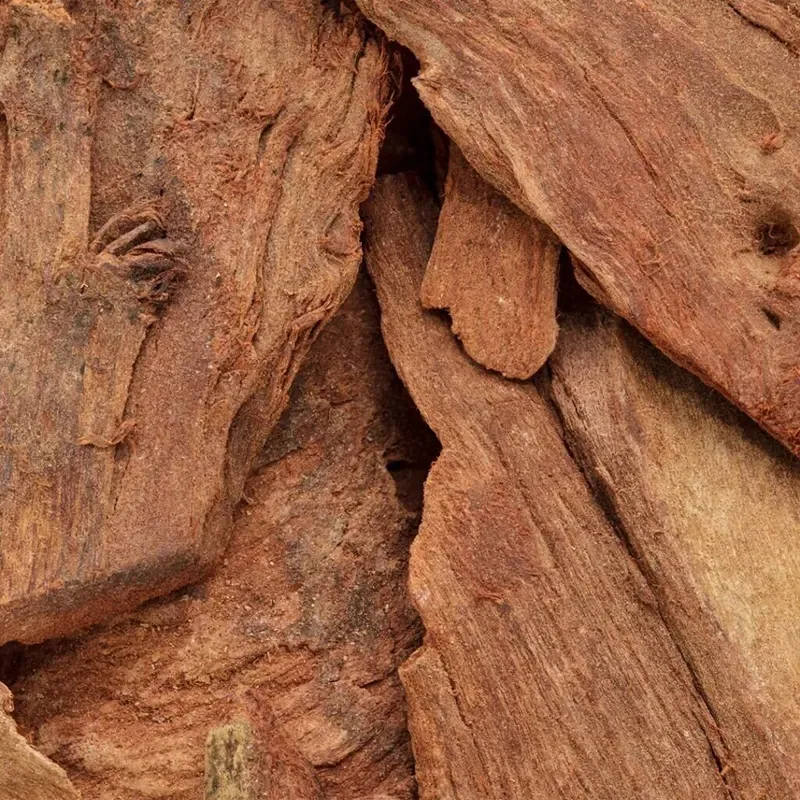
Visually, the Arjuna tree is defined by restraint.
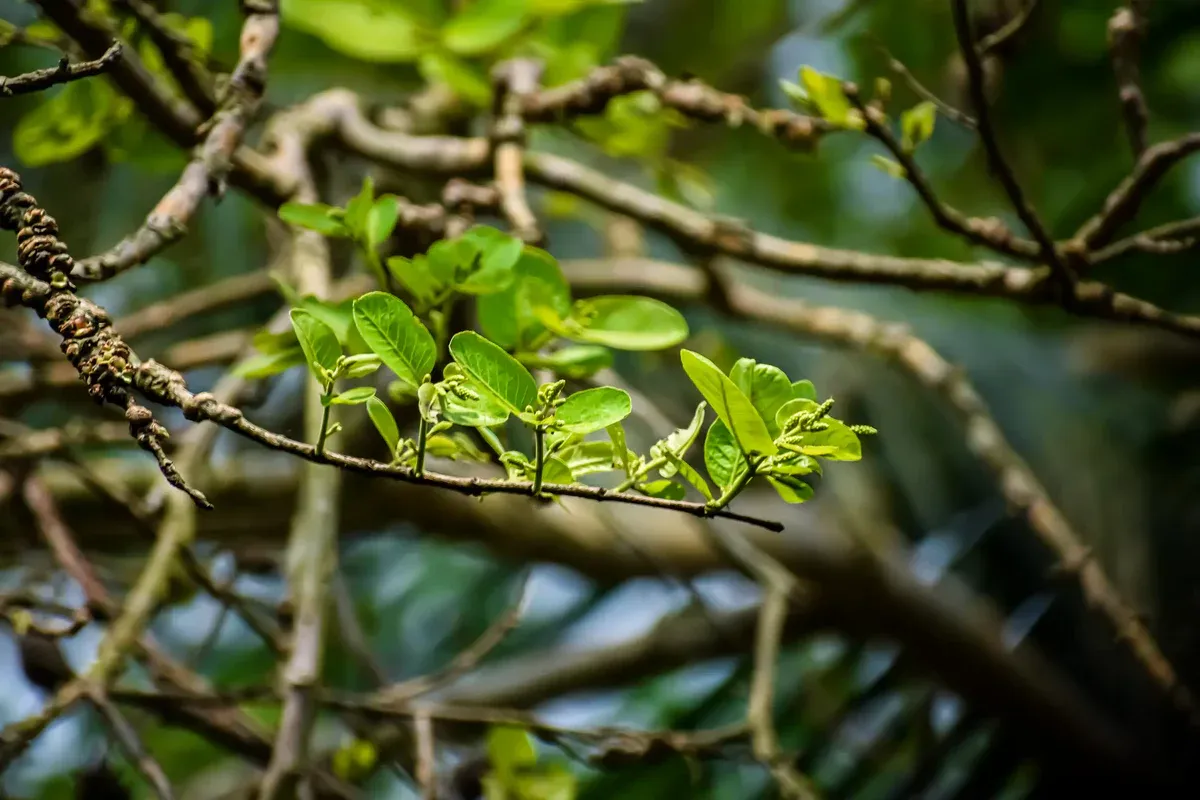
It grows tall but not sprawling, with an upright trunk and a balanced crown. Its bark is smooth and grey, often peeling in thin sheets, revealing lighter layers beneath. Leaves are leathery and oblong, designed to reduce water loss while remaining efficient in humid conditions.
This form is not ornamental. It is functional. Everything about the Arjuna tree suggests long-term survival in landscapes shaped by water and seasonal stress.
In mixed forests, the Arjuna rarely dominates. Instead, it integrates—coexisting with other species while maintaining its own structural identity.
An anchor for biodiversity near water

Riparian zones are among the most biologically productive landscapes, and the Arjuna tree plays a stabilising role within them.
Its canopy provides shade that moderates water temperature, which is crucial for aquatic life. Leaf litter contributes organic matter to river systems, supporting insects and microorganisms that form the base of food chains. Birds frequently use Arjuna trees for perching and nesting near water bodies, while insects rely on its foliage and bark.
This combination of shade, structure, and organic input makes the Arjuna tree an important component of healthy riverine ecosystems. Trees along water bodies are increasingly recognised as critical for landscape resilience in discussions around riverine ecology and restoration.
The Arjuna tree in traditional medicine

The Arjuna tree occupies a unique position at the intersection of ecology and traditional knowledge.
Its bark has been used for centuries in Ayurvedic practices, particularly in formulations related to heart health. This association is not symbolic; it emerged from long-term observation and use. Over time, the tree became embedded in everyday healthcare traditions across India.
Modern scientific interest in Terminalia arjuna has grown alongside this traditional knowledge. Reviews published in peer-reviewed medical literature, such as those indexed by the National Center for Biotechnology Information, explore the phytochemical properties of Arjuna bark and its potential cardiovascular relevance.
Carbon, stability, and climate relevance
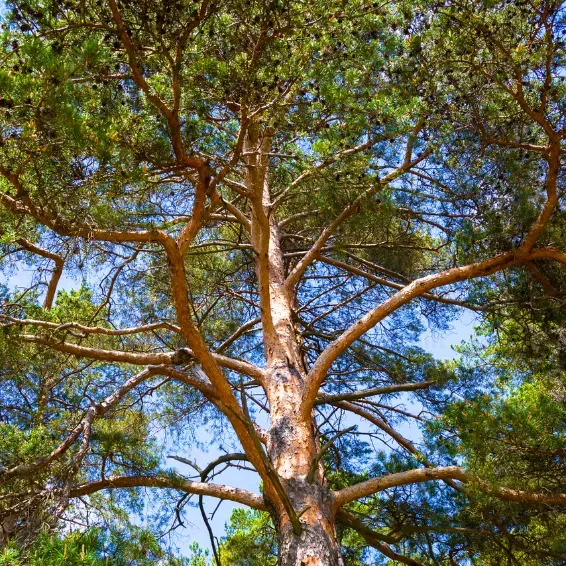
As a large, long-lived tree, the Arjuna stores carbon in its trunk, branches, and extensive root system. Its real climate value, however, lies in stability rather than speed.
By strengthening riverbanks, improving soil structure, and moderating microclimates near water, the Arjuna contributes to climate adaptation at a landscape level. These functions are especially important as extreme rainfall events and seasonal variability increase.
Climate resilience discussions increasingly emphasise the role of vegetation in reducing flood risk and buffering hydrological extremes, a framing that aligns with broader thinking on ecosystem-based adaptation.
The Arjuna tree fits naturally into this role—not as a carbon shortcut, but as long-term green infrastructure.
Why the Arjuna works in modern landscapes
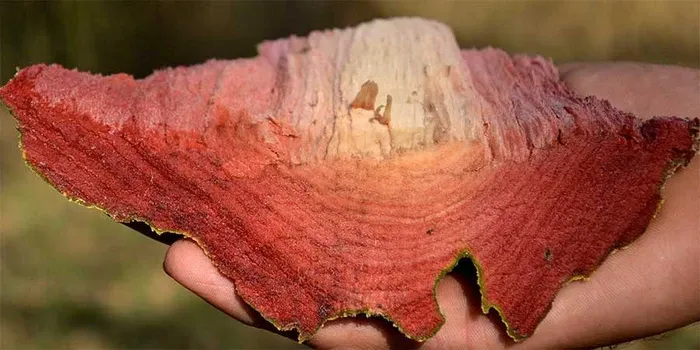
Despite its association with rivers, the Arjuna tree adapts well to human environments when conditions are right.
It is often planted along canals, lakes, and large urban water bodies, where it helps stabilise banks and improve microclimates. Its upright form makes it suitable for avenues and institutional campuses with access to moisture. Unlike highly ornamental species, it demands little attention once established.
However, it is not a tree for dry, compacted plots. Without adequate water access during early growth, young Arjuna trees struggle. Context matters.
Limits worth acknowledging

The Arjuna tree is not universally applicable.
It prefers moist, well-drained soils and performs poorly in prolonged drought without support. In heavily polluted waterways, its ecological benefits can be compromised. It is also slower to establish than many fast-growing species, making it unsuitable for short-term greening goals.
Recognising these limits is essential. Native species are not automatic solutions. Their success depends on alignment between ecology and place.
Why the Arjuna tree still matters
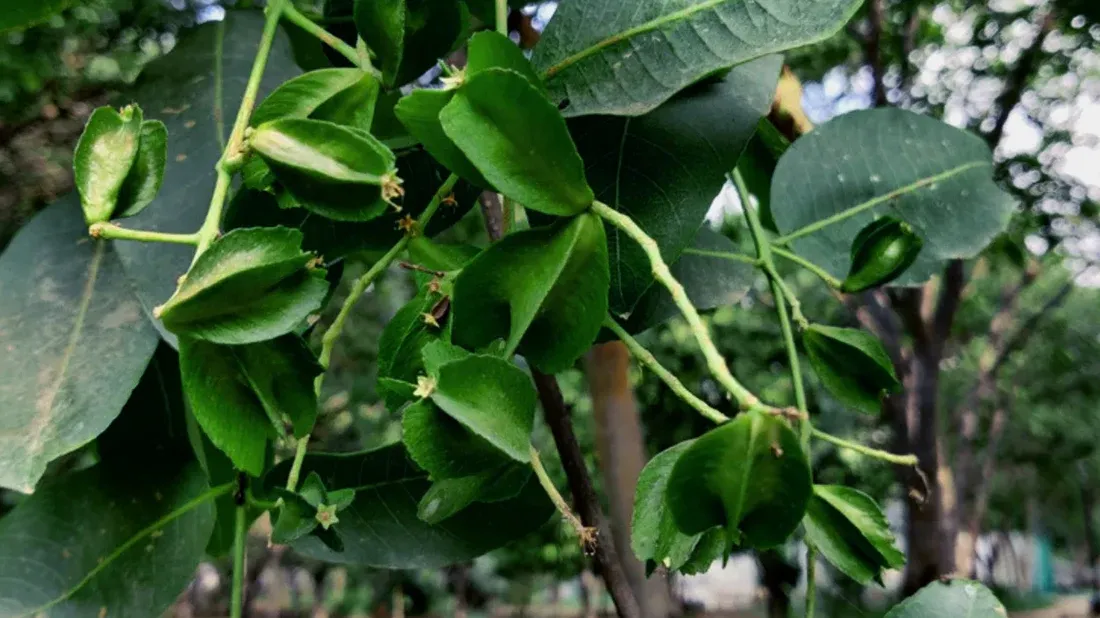
The Arjuna tree represents a form of strength that is easy to overlook.
It does not signal importance through colour or scale. It signals it through endurance. Through its relationship with water. Through its ability to hold soil, support life, and remain standing as landscapes shift around it.
In an era of climate uncertainty and stressed river systems, trees like the Arjuna remind us that resilience often comes from quiet, long-term relationships between species and place.
That is why the Arjuna tree still matters—not as a relic of tradition, but as a living structure that continues to do its work.
FAQs
1. What is the Arjuna tree?
The Arjuna tree is a large native Indian tree scientifically known as Terminalia arjuna. It is commonly found along rivers, lakes, and moist forest landscapes.
2. Where does the Arjuna tree grow naturally?
The Arjuna tree grows naturally along riverbanks and floodplains across the Indian subcontinent, where soil moisture remains relatively high throughout the year.
3. Why is the Arjuna tree associated with rivers?
Arjuna trees have strong root systems that help stabilise riverbanks and reduce soil erosion, making them well suited to flood-prone landscapes.
4. How tall does an Arjuna tree grow?
Under favourable conditions, Arjuna trees typically grow between 20 and 25 metres, forming a tall, upright canopy.
5. Does the Arjuna tree support biodiversity?
Yes. The Arjuna tree provides shade, habitat, and organic matter that support insects, birds, and riverine ecosystems.
6. Is the Arjuna tree used in traditional medicine?
The bark of the Arjuna tree has been used for centuries in Ayurvedic practices, especially in formulations related to heart health.
7. Does the Arjuna tree help with climate resilience?
The Arjuna tree contributes to climate resilience by stabilising riverbanks, moderating microclimates, and supporting ecosystem-based adaptation.
8. Can the Arjuna tree be planted in urban areas?
It can be planted in cities near lakes, canals, or large green spaces with adequate moisture, but it is not suitable for dry or compacted plots.
9. Is the Arjuna tree fast growing?
The Arjuna tree grows at a moderate pace. Its strength lies in long-term stability and endurance rather than rapid growth.
10. Why is the Arjuna tree still important today?
As pressure on rivers and freshwater systems increases, the Arjuna tree remains important for maintaining ecological balance in water-linked landscapes.